
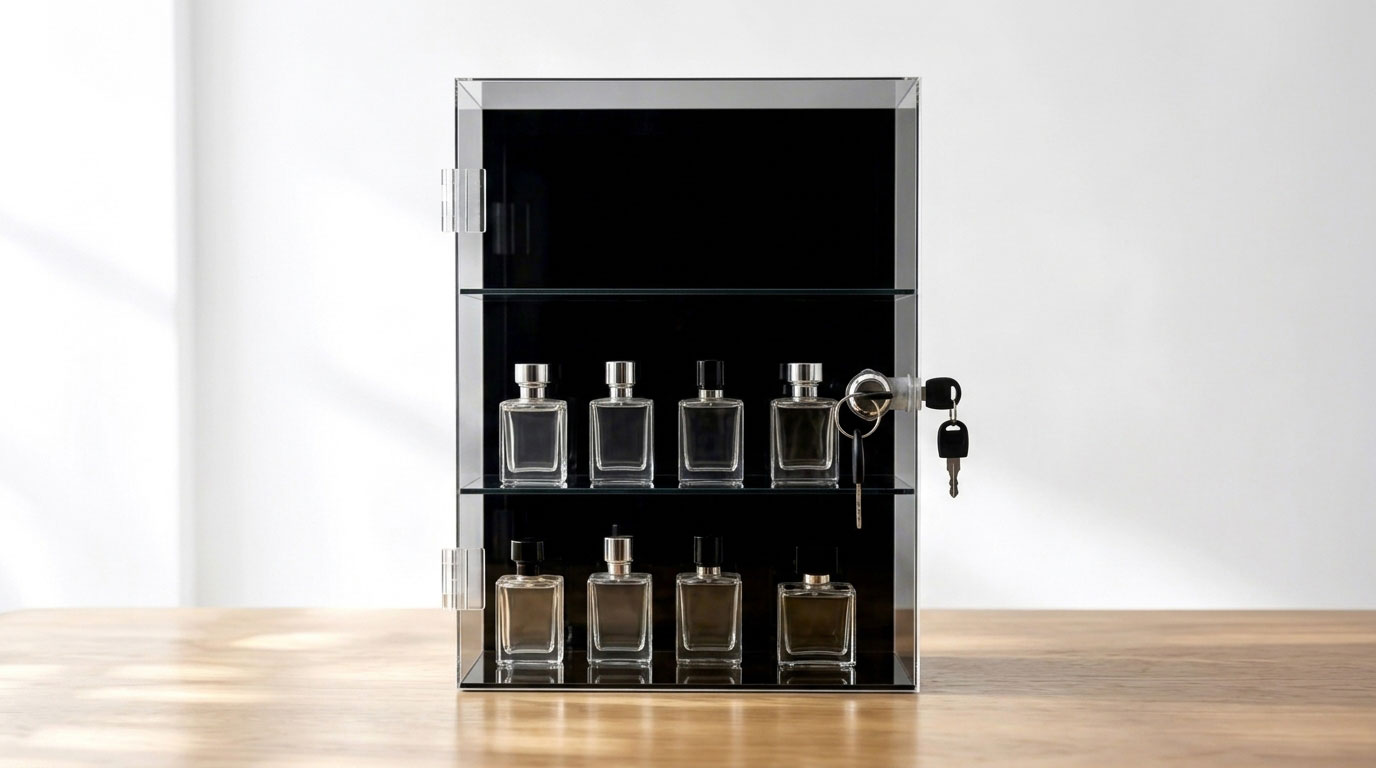
Choosing the right wholesale display box is one of the most overlooked yet critical decisions for retail and bulk buyers.
Your display packaging directly impacts product presentation, customer perception, transportation cost, and long-term store operation expenses. Many wholesale buyers struggle to tell the difference between clear acrylic and PVC display boxes, as both offer transparent visibility for products.
Picking the wrong material leads to faded displays, broken units during shipping, unnecessary replacement costs, or mismatched brand positioning. This guide breaks down every practical detail for bulk buyers, helping you make a cost-effective and suitable material choice for all retail scenarios.
Article Core Takeaways:
● Clear acrylic display box delivers premium clarity, high durability, and longer service life for high-end retail displays
● Clear PVC display box features ultra-low bulk cost and lightweight design for temporary and budget wholesale orders
● Material difference directly affects transportation loss, customization effects, and long-term maintenance costs
● Specific scenarios determine material selection, with no one-size-fits-all option for retail wholesale businesses
● Compliance and safety standards vary, impacting cross-border wholesale and food/cosmetic product displays
1. Basic Overview: Clear Acrylic & PVC Display Box
What is Clear Acrylic Display Box?
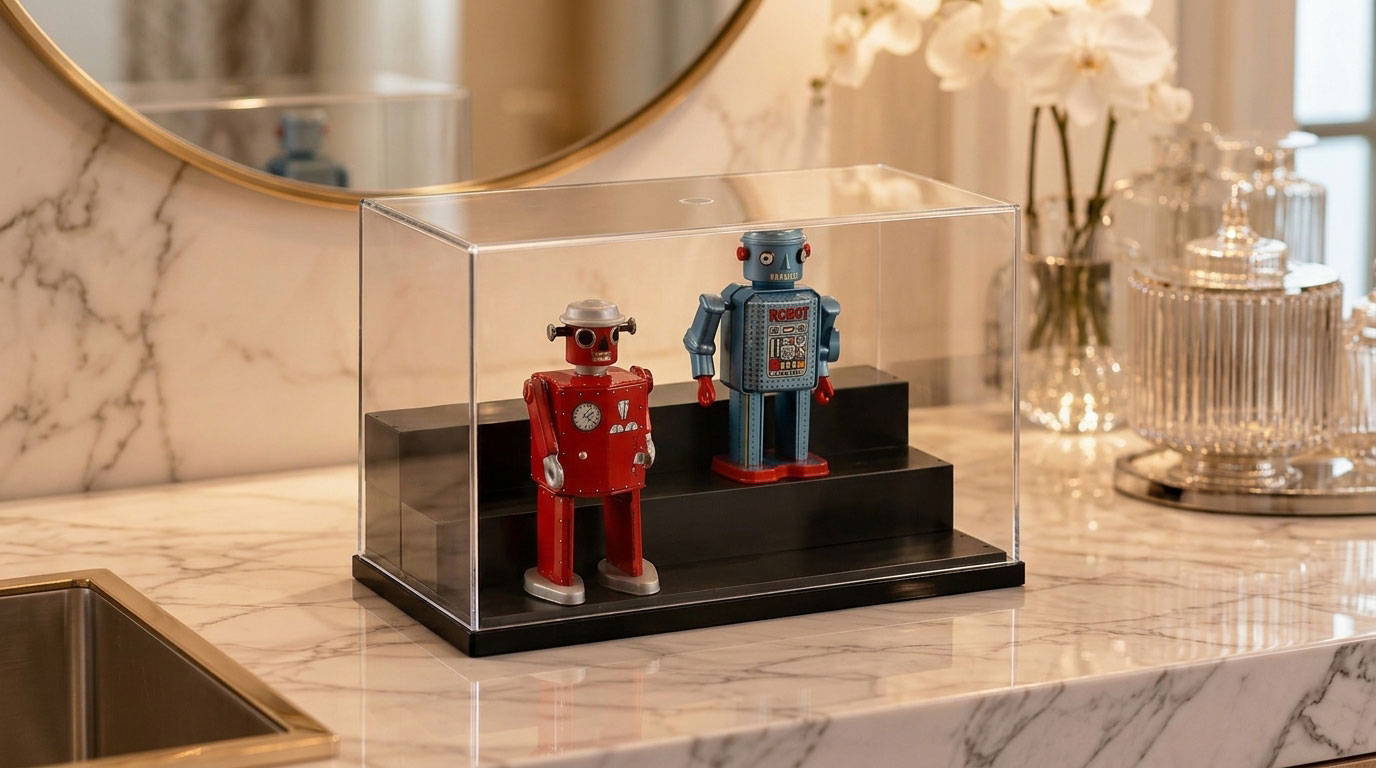
A clear acrylic display box is a rigid, high-transparency plastic display container made from PMMA material. It is widely recognized for its glass-like clarity and sturdy physical structure. Unlike ordinary plastic, acrylic resists daily scratches and maintains a brand-new look for years.
Most high-end physical stores, boutique brands, and permanent exhibition displays prefer this material. For wholesale buyers focused on long-term store decoration and brand image, the clear acrylic display box is a reliable fixed display solution.
What is Clear PVC Display Box?
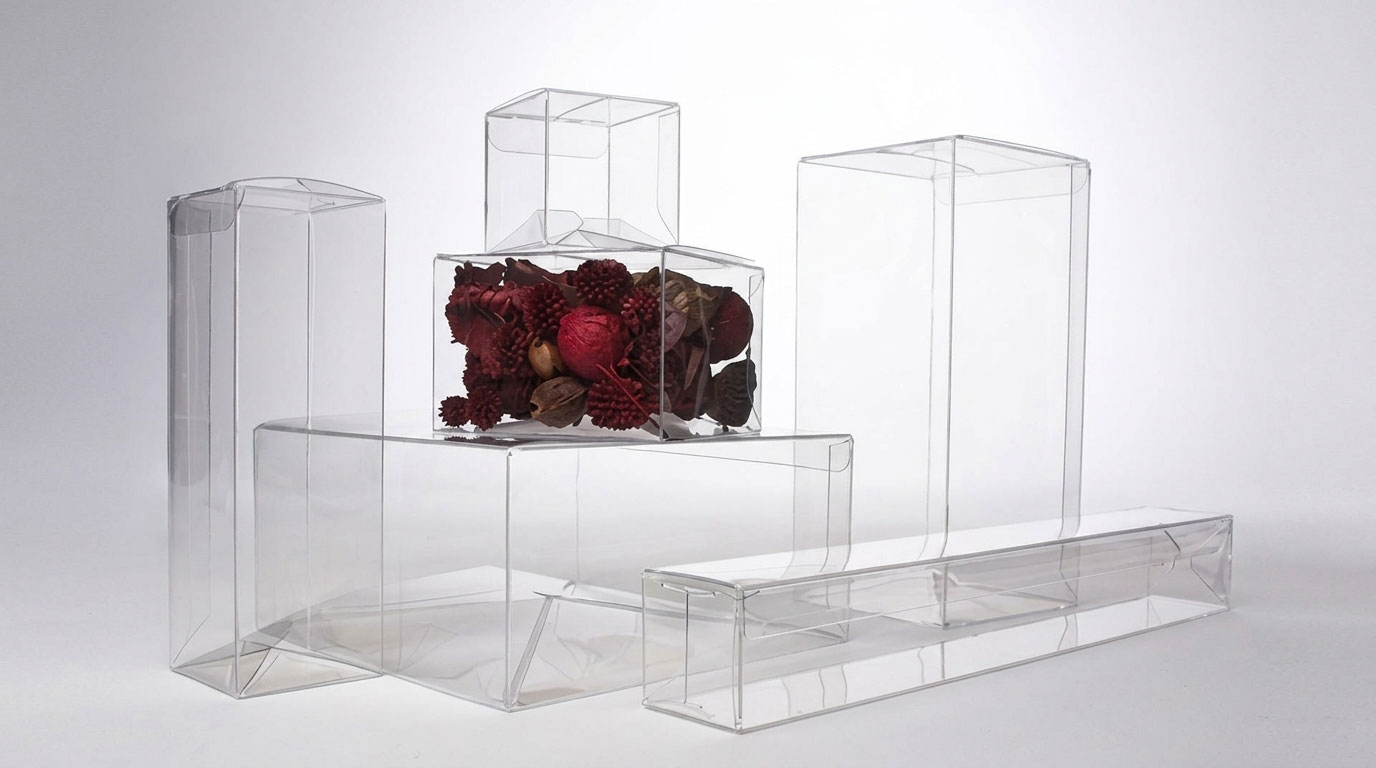
A clear PVC display box is a flexible, lightweight, transparent display packaging made from polyvinyl chloride. It is softer than acrylic and features excellent ductility, making it hard to crack during extrusion and collision. This material is extremely cost-friendly for bulk purchases.
It is commonly used for product packaging, temporary promotional displays, and disposable retail displays. It is the top choice for buyers with low-budget wholesale display box orders and short-term usage needs.
Core Differences in Material Composition
The essential gap between the two materials lies in hardness and molecular stability.
Acrylic is a rigid thermoplastic with a stable molecular structure, high hardness, and strong weather resistance. PVC is a flexible synthetic plastic with a softer texture, lower hardness, and slightly weaker anti-aging performance.
This fundamental difference leads to huge gaps in service life, display effect, and applicable scenarios for wholesale orders.
2. In-Depth Material Performance Comparison
For retail and wholesale buyers, material performance determines product loss rate, customer feedback, and repeated purchase frequency. The following comparison covers all practical indicators that bulk buyers care about.
|
Performance Index
|
Clear Acrylic Display Box
|
Clear PVC Display Box
|
|---|---|---|
|
Transparency
|
92%+ light transmittance, glass-level ultra-clear, no foggy vision
|
85%-90% transmittance, slight foggy feeling compared with acrylic
|
|
Hardness & Scratch Resistance
|
High hardness, resistant to daily friction scratches
|
Soft texture, easy to leave surface scratches
|
|
Impact Resistance
|
Strong anti-collision, not easy to break
|
Anti-extrusion but easy to deform under strong impact
|
|
Weather & Aging Resistance
|
Anti-UV, anti-yellowing, suitable for long-term indoor and outdoor use
|
Prone to yellowing and brittleness after long-term sunlight exposure
|
|
Weight
|
Slightly heavy, stable placement
|
Ultra-light, easy to carry and stack
|
Transparency & Visual Display Effect
Visual effect is the core value of transparent display boxes. The clear acrylic display box provides almost zero-distortion display effect, fully restoring product color and details. It can greatly improve product grade and attract customers’ attention. PVC has a slight matte fog feeling, which will not affect basic display but cannot support high-end brand display needs.
Durability & Impact Resistance
In bulk transportation and daily store use, durability directly reduces after-sales loss. Acrylic is tough and not easy to crack, even with accidental collision. PVC is flexible and not easy to break, but it is prone to permanent deformation after squeezing. For long-term repeated use, acrylic is far more durable than PVC display boxes.
Weather Resistance & Service Life
Indoor and outdoor usage have different requirements for materials. Acrylic features excellent UV resistance, effectively avoiding yellowing and aging. Its service life can reach 3-5 years under normal use. PVC will gradually turn yellow and brittle after 6-12 months of outdoor exposure, and indoor use only guarantees 1-2 years of good appearance.
Surface Maintenance Performance
The surface of the clear acrylic display box is smooth and dense, resistant to oil stains and dust. It can be cleaned directly with a wet cloth without leaving marks. The PVC surface is relatively soft, easy to accumulate dust and leave scratch marks, requiring more frequent cleaning and maintenance in daily retail use.
Transportation Adaptability
PVC’s lightweight feature reduces overall shipping weight for wholesale orders, lowering logistics costs. Acrylic is heavier and needs thicker packaging to prevent collision damage during long-distance transportation. For cross-border bulk shipping, PVC has natural cost advantages, while acrylic requires more professional packaging solutions.
3. Cost & Wholesale Pricing Comparison
Unit Material Cost Gap
In raw material pricing, PVC is significantly cheaper than acrylic. The unit price of a clear PVC display box is usually 30%-50% lower than acrylic products of the same size. For large-volume wholesale orders with thousands of units, the total cost gap is very obvious, which is why many budget-focused buyers prefer PVC.
Bulk Customization Cost
Both materials support custom size, logo printing, and special molding. PVC has lower processing difficulty and lower customization fees, with faster proofing speed. Acrylic requires precise cutting and polishing processes, with slightly higher customization costs and longer proofing cycles, but the finished product is more exquisite and textured.
Long-Term Cost Performance
Although PVC has a low upfront purchase cost, it needs frequent replacement due to aging and deformation. Acrylic has a higher one-time investment but ultra-low maintenance and replacement costs. For fixed store displays, acrylic has better long-term cost performance; for short-term batch activities, PVC is more economical.
4. Application Scenarios: Material Matching Guide
Best Scenarios for Clear Acrylic Display Box
● High-end retail stores: cosmetics, jewelry, watches, luxury gifts
● Long-term fixed store display and brand image showcase
● Outdoor window display and exhibition booth display
● High-standard product display requiring long-term texture retention
Best Scenarios for Clear PVC Display Box
● Daily consumer goods, stationery, toys, and snack product packaging display
● Short-term festival promotions, flash sales, and temporary activity displays
● Low-budget, large-quantity wholesale display box orders
● Product outer packaging that requires lightweight and easy stacking
Scenario Exclusion Tips
Do not use PVC for high-end brand fixed displays, as its foggy transparency and easy aging will downgrade brand texture. Do not blindly use acrylic for temporary promotional activities, as it will cause unnecessary cost waste. Reasonable material matching is the key to wholesale order profit maximization.
5. Customization & Production Performance
Processing Difficulty & Molding Effect
PVC is soft and easy to cut, bend, and fold, supporting various irregular box shapes with a low defect rate. Acrylic is hard and requires professional laser cutting and high-temperature bending. Its molding edge is smooth and flat without burrs, with higher overall flatness and a three-dimensional sense in finished products.
Custom Printing & Engraving Effect
Both materials support silk screen printing, UV printing, and laser engraving. Acrylic has a smooth and firm surface, with clear printing patterns that are not easy to fall off. PVC has a slightly soft surface, and printing patterns may wear off after long-term friction. For brands requiring long-term display of logos and slogans, acrylic is more suitable.
Wholesale Production Cycle
PVC materials are easy to process with fast mass production speed, capable of completing large wholesale orders in a short cycle. Acrylic requires multiple processes, including cutting, polishing, and bonding, with a longer production cycle. For urgent bulk orders, PVC can meet delivery needs faster.
6. Environmental & Safety Compliance
Recyclability & Environmental Protection
Acrylic is a highly recyclable, environmentally friendly material that can be reprocessed and reused after recycling with low pollution. Most conventional PVC materials are difficult to degrade and have limited recycling value. For European and American buyers with strict environmental protection requirements, acrylic is more in line with local import standards.
Food & Cosmetic Safety Certification
Food-grade acrylic materials pass FDA safety certification and are safe for direct display of snacks, candies, and baked goods. Ordinary PVC cannot contact food directly, and only specially modified food-grade PVC meets safety standards. For food and cosmetic retail and wholesale, acrylic has higher safety and applicability.
Cross-Border Import Compliance
High-quality acrylic display boxes fully comply with global mainstream import standards, with no customs clearance risks. Some low-cost PVC materials may fail to meet EU environmental and safety standards, easily causing customs detention. Stable, compliant materials are essential for long-term cross-border wholesale business.
FAQ

Which is more cost-effective for large-quantity wholesale orders, acrylic or PVC display boxes?
For short-term use and large-batch temporary displays, a clear PVC display box has higher cost performance with lower upfront investment. For long-term fixed store displays, acrylic saves more costs in replacement and maintenance, making it more cost-effective for long-term wholesale cooperation.
What is the service life difference between acrylic and PVC display boxes?
High-quality acrylic display boxes can be used for 3-5 years indoors and 2-3 years outdoors with a stable appearance. Ordinary PVC display boxes only maintain good condition for 1-2 years indoors and less than 1 year outdoors, with obvious yellowing and deformation later.
Can PVC display boxes replace acrylic boxes for high-end product display?
No. PVC’s slightly foggy transparency, easy-scratch surface, and short service life cannot meet high-end brand display standards. High-end products require the ultra-clear, high-texture visual effect of acrylic to enhance product grade and brand image.
Are acrylic and PVC display boxes food-safe for snack display?
A food-grade clear acrylic display box is fully safe for food display and meets FDA certification. Ordinary PVC is not food-safe. Only customized food-grade PVC can be used for snack display, with fewer application scenarios than acrylic.

Which material is more suitable for cross-border wholesale and long-distance transportation?
PVC is lightweight with low transportation costs and not easy to break, suitable for cross-border bulk wholesale. Acrylic needs professional anti-collision packaging with higher logistics costs, but it has a lower after-sales damage rate after arriving at the destination.
Can I get the same custom printing effect on acrylic and PVC display boxes?
They can achieve the same pattern effect initially, but acrylic printing is more wear-resistant and durable. PVC printing is prone to fading and falling off after long-term friction and cleaning. For customized display boxes requiring long-term use, acrylic is the better choice.
Final Buying Guide & Selection Tips
Budget-Based Quick Selection
Low budget + large batch + short-term use: choose a clear PVC display box. Medium and high budget + long-term reuse + high brand requirements: choose a clear acrylic display box. Balanced budget orders can adopt a mixed matching scheme to maximize cost performance.
Scenario-Based Quick Selection
Fixed store display, high-end products, outdoor exhibition: prioritize acrylic. Temporary promotion, disposable packaging, daily consumer goods display: prioritize PVC. This matching rule avoids material mismatch and unnecessary order loss.
Wholesale Order Practical Tips
When placing bulk wholesale display box orders, confirm material grade, safety certification, customization details, and packaging standards in advance. For cross-border orders, prioritize compliant materials to avoid customs risks. Sample confirmation before mass production can effectively reduce the batch defective rate.
Conclusion
After a comprehensive comparison of transparency, durability, cost, customization, and safety, both clear acrylic and clear PVC display boxes have their unique applicable advantages.
There is no absolute better material, only the most suitable one for your retail wholesale scenario.
PVC is the best budget choice for temporary and large-batch display demands, while acrylic is the premium solution for long-term high-quality brand display.
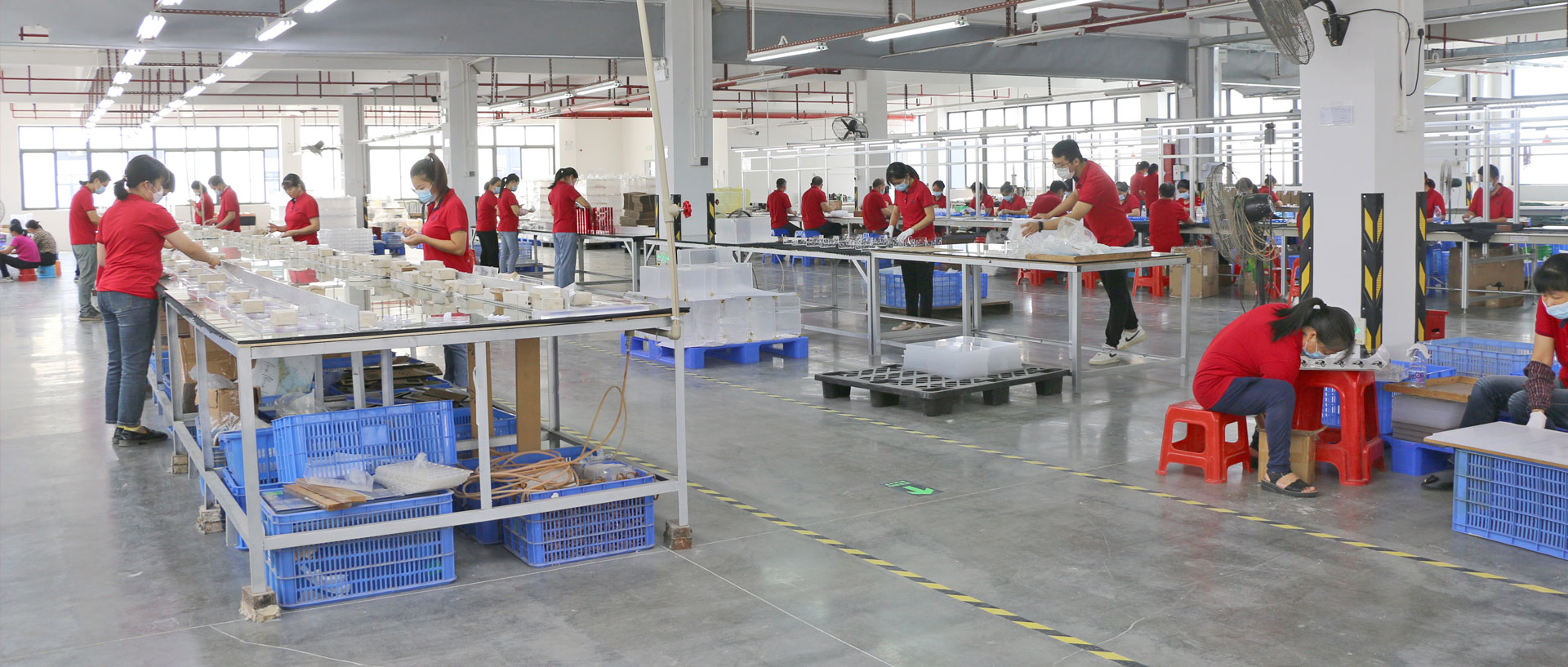
To get high-quality, customized wholesale display box solutions with stable quality and reliable after-sales service, choose JAYI Acrylic.
As a professional custom acrylic box factory with rich bulk order experience, we provide standardized PVC and acrylic display products, one-stop custom processing, strict quality inspection, and stable global delivery service.
We help retail and wholesale buyers reduce procurement costs and improve display brand effect with professional manufacturing strength.

Cathy Qin works at Jayi Acrylic Industry Limited, focusing on custom acrylic product management and SEO-driven content marketing for B2B wholesale and retail applications. Her work includes designing display solutions, managing customization projects, and optimizing website content to promote Jayi’s high-quality acrylic products across global digital channels.
Post time: Sep-01-2026