
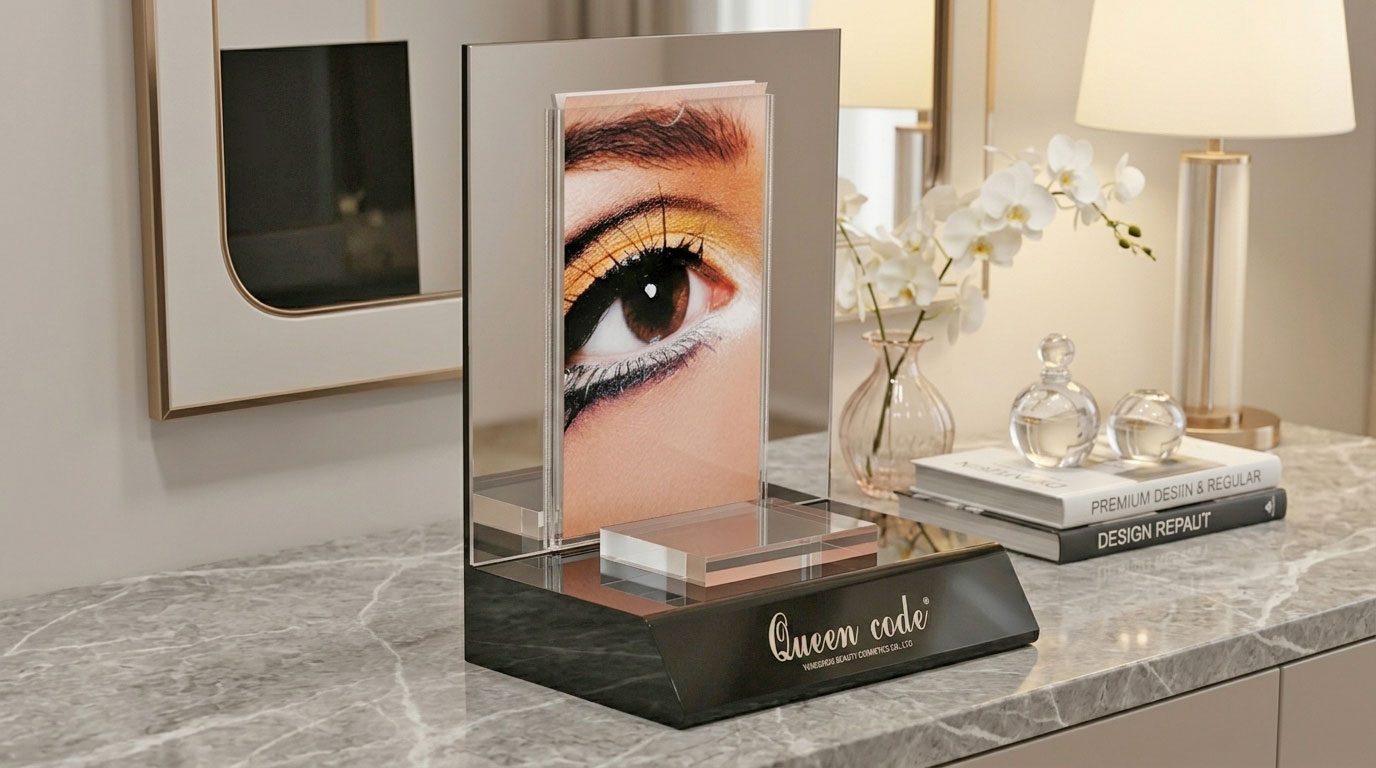
Picking the correct size for a custom acrylic skincare display is far more important than most retailers think. Many brands rush into customization and end up with stands that are too big, too small, or poorly fitted for their store space. Wrong sizes lead to messy product layouts, wasted counter space, damaged visuals, and even unnecessary remake costs.
This beginner-friendly acrylic display size guide walks you through every practical step to size your display perfectly for skincare retail scenarios.
In this guide, you will learn these core takeaways:
• How to measure retail space accurately for a tailored fit
• How to match display dimensions with different skincare product packaging
• Scenario-based sizing rules for counters, pop-ups, and window displays
• Key parameters to confirm before bulk customization
• Common sizing mistakes that hurt your skincare retail display effect
1. Measure Your Exact Placement Space First (Foundation of Sizing)
All qualified custom acrylic skincare display solutions start with accurate on-site measurement. Guessing dimensions will always result in mismatched displays that fail to serve your retail goals.
Standard countertop & shelf space measurement
When measuring counter spaces, focus on three basic dimensions: length, width, and vertical height. Avoid only measuring partial areas. You need to record the full available space where the display will sit.
Leave 2–5 cm of spare space on all sides. This small gap prevents the stand from being too tight to place and makes daily cleaning much easier. It also avoids scratches on your counter and acrylic display edges.
Freestanding vs. wall-mounted space limitations
Desktop counter displays have stricter width and depth limits. Floor-standing displays allow taller and larger sizes but require enough aisle space for customer movement.
Wall-mounted acrylic racks need precise height positioning. Too high makes products hard to reach, while too low blocks customer sightlines. Always confirm wall height and obstacle positions before finalizing sizes.
Reserve clearance for customer interaction
A good skincare retail display should prioritize user experience. Do not fill the entire counter with displays. Reserve enough space for customers to pick up, test, and put back skincare products freely.
2. Size Matching With Your Skincare Product Portfolio
Store space defines the outer limit of your display size, while your products define the internal compartment layout. Skincare items have diverse packaging, which makes internal sizing critical.
Size adaptation for different skincare packaging
Different skincare products require different shelf heights and compartment widths. Bottles with pump heads, tall toners, and wide cream jars cannot share the same fixed layer height.
Here is a quick reference table for common skincare product sizing:
|
Product Type |
Recommended Layer Height |
Compartment Width |
|
Small serum/essence bottles |
8–12 cm |
6–8 cm |
|
Cream & moisturizer jars |
6–10 cm |
7–10 cm |
|
Tall toner/lotion bottles |
15–20 cm |
8–10 cm |
|
Facial mask boxes & sets |
5–8 cm |
10–15 cm |
Single-product vs. mixed display sizing
If you only display one best-selling product, you can design uniform compartments for neat alignment. For mixed skincare displays, unequal layer heights are always better.
Short mask boxes fit low layers to save vertical space, while tall bottles occupy higher layers. This matched layout eliminates empty gaps and avoids overcrowded placement.
Consider future product updates
Smart sizing reserves minor flexibility for new product launches. Leave 1–3 cm extra height on main layers to adapt to slightly upgraded packaging sizes later.
3. Follow Retail Display Scenario Size Standards
Different sales scenarios require totally different size strategies. A fixed in-store display does not work for pop-up exhibitions, and vice versa.
In-store fixed counter display sizing
For long-term use in beauty salons, cosmetic shops, and pharmacies, prioritize stability and moderate size. Standard desktop sizes range from 25–40 cm in width and 15–25 cm in depth.
This size range fits most commercial counters and delivers a high-end, tidy brand presentation all year round.
Pop-up & trade show portable sizing
Event displays need compact, split, and lightweight sizes. Avoid oversized integrated stands that are hard to transport.
Most exhibition custom acrylic skincare display units adopt a modular size under 30 cm in length. They are easy to assemble, disassemble, and rearrange for different booth layouts.
Window display layered sizing
Store window displays focus on visual hierarchy. Design progressive layer heights to create a stereo display effect. Wider base sizes ensure overall stability for high window placement.
4. Key Size Parameters You Must Confirm Before Customization
Many size errors happen due to unclear parameter communication. Before confirming production, double-check these three core details with your supplier.
Overall dimension: Length × Width × Height
Overall dimensions decide whether the stand fits your space. Always confirm external sizes first, instead of only focusing on internal shelf space.
Single compartment spacing & layer height
This is the most critical detail in this acrylic display size guide. Always calculate layer height based on your tallest product on that layer, plus 2–3 cm spare space for easy picking.
Edge & base proportional design
A wider base ensures the display will not tip over when fully loaded with skincare products. Keep edge width uniform for a clean, premium look that matches high-end beauty branding.
5. Balance Size, Cost & Visual Presentation
Size directly determines your customization cost and retail display effect. Blindly pursuing larger sizes will only waste budget and ruin store aesthetics.
How size affects acrylic customization cost
Larger displays consume more acrylic sheets and require more cutting and polishing work. Oversizing without actual demand significantly increases unit costs.
Risks of undersized displays
Smaller displays cannot hold full product stocks. Crowded placement covers product labels, blocks customer sightlines, and greatly reduces purchase willingness.
Proportional sizing for premium texture
The best skincare retail display uses balanced spacing. Proper gaps between products create a luxurious, professional look, which perfectly fits skincare brands’ high-end positioning.
6. Common Size Mistakes to Avoid for Custom Displays
Most sizing failures come from simple but overlooked details. Avoid these three typical mistakes before placing your order.
Ignoring pump head and cap height
Many buyers only measure bottle body height. Pump heads, spray nozzles, and raised caps usually add 2–4 cm extra height, making products unable to fit on final shelves.
No reserved space for accessories
If you need LED strips, engraved logos or backplates, reserve extra space in advance. Missing this step causes assembly failure and size mismatch.
Uniform layers for mixed products
One-size-fits-all layers always cause space waste and placement problems. Mixed skincare products require a customized, unequal layer design for the best utilization.
FAQs About Custom Acrylic Skincare Display Sizing

What is the most versatile standard size for desktop acrylic skincare displays?
The most universal desktop size ranges from 25–40cm (length) × 15–25cm (depth) × 20–35cm (height). This size fits most retail counters, beauty salons, and checkout areas, suitable for daily skincare product display.
How to decide the layer height for mixed skincare bottles and jars?
Always take the maximum height of the tallest product on each layer, then add 2–3cm movable clearance. For mixed displays, design staggered layer heights instead of uniform layers to maximize space utilization.
Does a larger display size mean better retail presentation effect?
No. Excessively large displays create empty, sparse visuals and waste valuable counter space. The best size always matches your product quantity and store layout, not the biggest possible dimension.
Can I adjust the size of finished acrylic displays later?
Finished acrylic displays cannot be resized or cut freely. Secondary processing will damage the polishing edges and overall structure. You must confirm all sizes before mass production.
What size suits portable skincare displays for trade shows?
For exhibitions and pop-up events, choose compact modular sizes under 30cm in length. Split small units are lightweight, easy to carry, and flexible for different booth arrangements.
How much space should I reserve between skincare products?
Reserve a 1–2cm gap between regular products for a tidy look. Leave 3–4cm gaps for trial products, allowing customers to pick and test items conveniently without knocking over adjacent products.
Conclusion
Choosing the right size for your custom acrylic skincare display is not about guessing numbers — it is about matching space, products, and retail scenarios step by step. Accurate measurement, product-based internal layout, and scenario-adapted sizing help you avoid common mistakes, save costs, and boost in-store sales.
If you are still confused about dimension design or need professional size customization suggestions, work with a reliable acrylic display manufacturer.

As a professional factory focusing on customized beauty display solutions, JAYI Acrylic (jayi-acrylic.com) provides one-stop sizing design, sample confirmation, and mass production services for global skincare retailers. With rich industry experience, we tailor every skincare retail display to fit your store style and product features perfectly.

Cathy Qin works at Jayi Acrylic Industry Limited, focusing on custom acrylic product management and SEO-driven content marketing for B2B wholesale and retail applications. Her work includes designing display solutions, managing customization projects, and optimizing website content to promote Jayi’s high-quality acrylic products across global digital channels.
Post time: Aug-21-2026