
Mahjong, a traditional tile-based game with roots in ancient China, has long been a beloved pastime for families and friends worldwide.
Beyond its entertainment value, mahjong offers a wealth of developmental benefits for kids—from enhancing critical thinking and math skills to fostering patience, social awareness, and family bonding.
Teaching kids to play mahjong may seem daunting at first, as the game has specific rules, tile sets, and strategies. However, with the right approach, simplified steps, and a focus on fun, you can introduce your child to this timeless game and create lasting memories together.
In this comprehensive guide, we’ll walk you through everything you need to know to teach kids to play mahjong, including age-appropriate adaptations, essential tips, common mistakes to avoid, and how to keep the experience engaging for young learners.
Why Teach Kids Mahjong? The Hidden Benefits
Before diving into the “how,” let’s explore the “why.” Mahjong isn’t just a board game—it’s a tool for holistic child development. Here are some key benefits that make it worth teaching your kid:
Cognitive Development
Mahjong requires players to think strategically, plan, and make quick decisions—all of which boost cognitive flexibility. Kids will learn to recognize patterns (in tile sets), count tiles, and calculate probabilities (e.g., which tiles are likely to be drawn next), strengthening their math and problem-solving skills. Memory is also enhanced, as players must remember discarded tiles and track which ones their opponents might need.
Social and Emotional Skills
Mahjong is typically a 4-player game, making it an excellent way for kids to practice turn-taking, communication, and sportsmanship. They’ll learn to win gracefully and lose with resilience, as well as respect others’ moves. Playing with family also deepens emotional connections, as it creates a low-pressure space for conversation and shared joy.
Cultural Awareness
As a game with thousands of years of history, mahjong offers a window into Chinese culture and traditions. Teaching your child mahjong can spark curiosity about its origins, symbolism (e.g., the meaning of different tile designs), and how it’s played across different regions (e.g., Chinese, Japanese, or American mahjong). This cultural exposure broadens their worldview from a young age.
Focus and Patience
Unlike fast-paced video games, mahjong requires patience and sustained focus. Kids will learn to slow down, observe the game carefully, and avoid impulsive moves—skills that translate to better performance in school and daily life.
What Age Is Suitable for Kids to Learn Mahjong?
There’s no strict “right age” to teach kids mahjong, but most children aged 7 and above can grasp the basic rules with proper guidance. Younger kids (5–6 years old) may enjoy simplified versions of the game (we’ll cover these later) to build familiarity with tiles and turn-taking, while older kids (8+) can tackle more complex rules and strategies. The key is to match the game’s complexity to your child’s cognitive and attention span—never rush them, and prioritize fun over mastery in the early stages.
Preparing to Teach Mahjong: Tools and Setup
Before your first lesson, gather the right tools and set up a kid-friendly environment to set the stage for success.
Choose the Right Mahjong Set
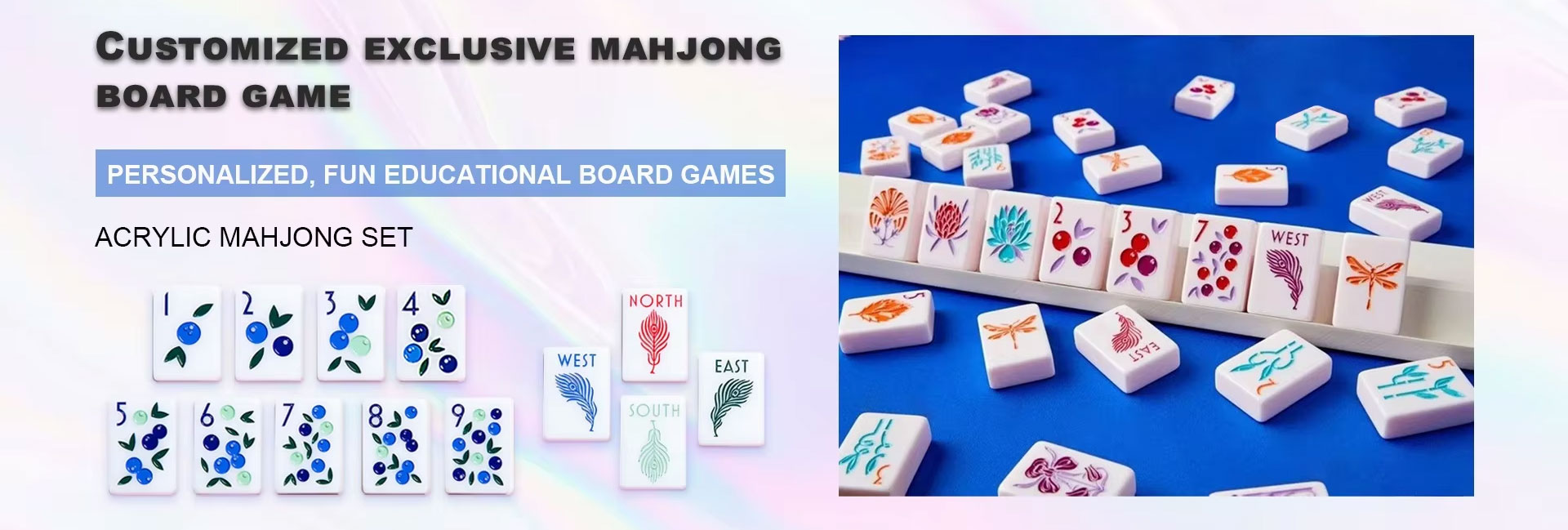
Standard mahjong sets have 144 tiles, which can be overwhelming for kids. Opt for a kid-friendly acrylic mahjong set with larger tiles (easier to hold) and bright, colorful designs (to keep their attention). Some sets even feature cartoon characters or simplified symbols instead of traditional Chinese characters, making it easier for kids to recognize tiles. If you don’t have a kid-specific set, you can use a standard set but remove extra tiles (e.g., flowers and seasons) to reduce complexity initially.
Simplify the Tile Set
For beginners, start with a simplified tile set to avoid confusion. Here’s how to streamline it:
• Numbers (Suits): Keep the three main suits—dots (circles), bamboo (sticks), and characters (numbers). Each suit has tiles numbered 1–9, with 4 copies of each tile. This gives you 108 tiles, which is manageable for kids.
• Wind and Dragon Tiles: Hold off on wind (East, South, West, North) and dragon (Red, Green, White) tiles until your child masters the basic suits. These tiles add complexity with special rules, so save them for later lessons.
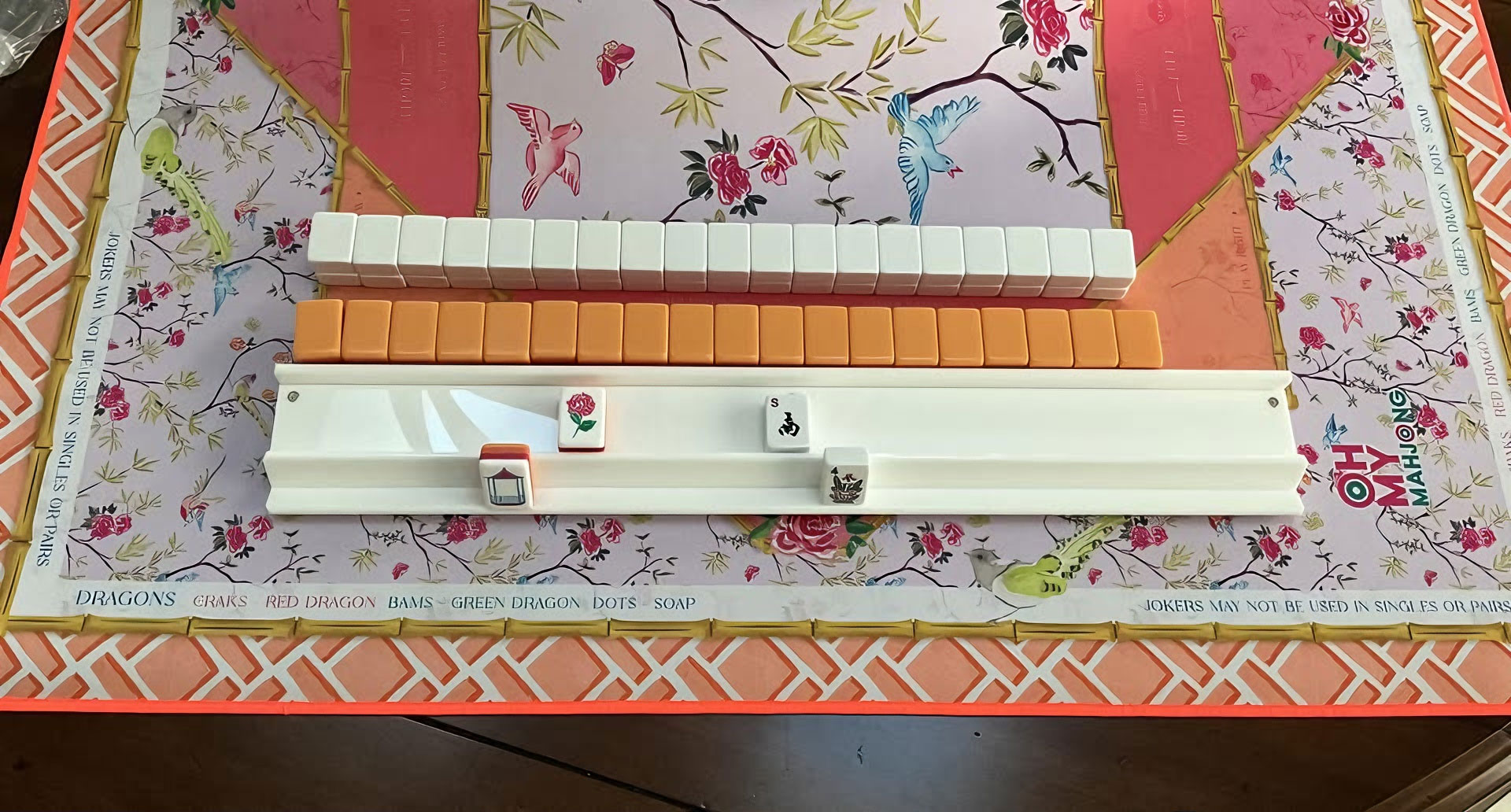
• Bonus Tiles: Remove flowers and seasons entirely—these are optional in most versions and can distract new learners.
As your child becomes more comfortable, gradually reintroduce wind, dragon, and bonus tiles to expand their skills.
Set Up a Comfortable Playing Space
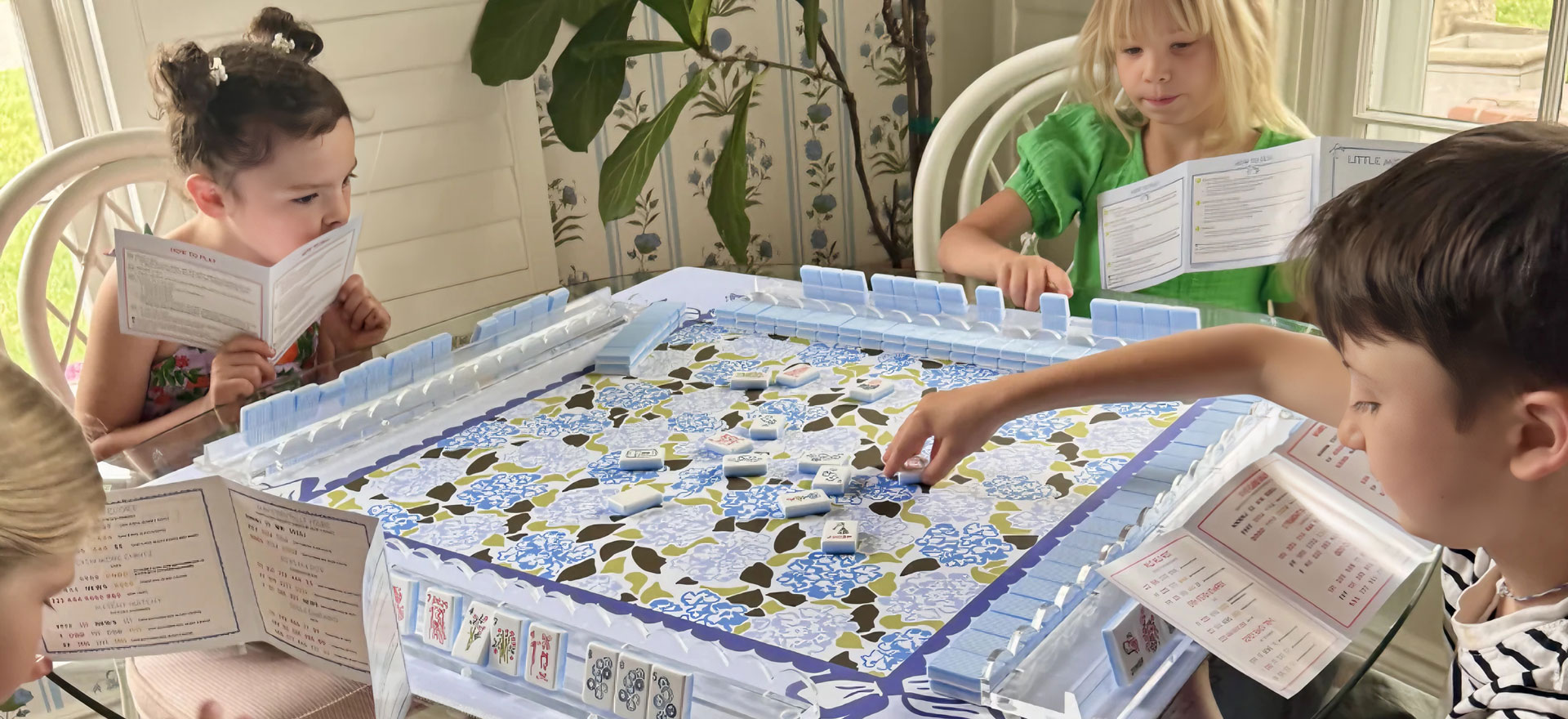
Kids learn best in a relaxed, distraction-free environment. Choose a table that’s the right height for your child (so they can reach all tiles easily) and gather around with 2–3 players (fewer players mean more turns and less waiting, which keeps kids engaged). Keep snacks and water nearby to avoid interruptions, and turn off TVs, phones, or other devices that might distract them.
Step-by-Step Guide to Teaching Kids Mahjong
Teaching mahjong to kids requires breaking down the game into simple, manageable steps. Start with the basics—tile recognition and objective—before moving on to rules and gameplay. Below is a step-by-step approach to make learning easy and fun.
Step 1: Teach Mahjong Tile Recognition (The Foundation)
Before your child can play, they need to recognize and name each mahjong tile. This is the most critical first step, so take your time and make it interactive. Here’s how:
1. Sort the Tiles Together: Pour out the simplified tile set and sort them by suit (dots, bamboo, characters). Explain each suit’s design—for example, “Dots are circles, like cookies. Bamboo looks like sticks, and characters are numbers in Chinese.”
2. Play Matching Games: Turn this into a game to keep it fun. Lay tiles face up and ask your child to find all the 3-dot tiles, or match pairs of the same tile. You can also play “I Spy”: “I spy a tile with 5 bamboo sticks—can you find it?”
3. Practice Naming Tiles: Hold up a tile and ask your child to name the suit and number. Praise their efforts (“Great job! That’s a 7-character tile”) to build confidence. For younger kids, use nicknames (e.g., “cookie tiles” for dots) to make memorization easier.
Spend 1–2 short sessions (15–20 minutes each) on tile recognition before moving on. Rushing this step will lead to confusion later.
Step 2: Explain the Objective of the Mahjong Game
Once your child recognizes the mahjong tiles, explain the core goal of mahjong in simple terms: To form a valid hand of 14 tiles before your opponents.
Simplify the valid hand for beginners—focus on the most common combination: Four sets of three tiles (called “melds”) and one pair of tiles (called “eyes”) .
• Melds: A meld can be three identical tiles (e.g., three 5-dot tiles) or three consecutive tiles of the same suit (e.g., 2, 3, 4 bamboo). Explain this as “three of a kind” or “a straight, like in cards.”
• Eyes: A pair of identical tiles (e.g., two 7-character tiles). Compare this to a “pair” in card games like Go Fish.
Use visual aids to reinforce this: lay out a valid hand with your simplified tile set and point out each meld and the pair. Say, “See? Four groups of three and one group of two—that’s how you win!” Avoid explaining more complex winning hands (e.g., all honors, seven pairs) until your child masters the basic hand.
Step 3: Teach the Basics of Gameplay (Turns and Drawing/Discarding)
Now that your child understands the objective, walk them through the flow of a turn. Keep the first few games slow—focus on consistency rather than speed.
1. Dealing the Tiles: Explain that each player starts with 13 tiles (you’ll add one more during your turn to make 14). For kids, deal the tiles one at a time to make it fair and engaging—let them count their tiles to practice number recognition.
2. The Turn Sequence: Break down a single turn into two simple steps:
Draw a Tile: The first player draws one tile from the wall (the stack of remaining tiles) to make their hand 14 tiles.
Discard a Tile: After drawing, the player must discard one tile from their hand (to go back to 13 tiles) and place it face up in the center. Explain that the goal is to discard tiles that don’t help form melds or pairs.
3. Take Turns: Show your child how turns go clockwise around the table. Let them practice drawing and discarding a few times before adding more rules—this helps them get comfortable with the rhythm of the game.
Tip: For younger kids, skip the wall and place all tiles in a central pile. Players draw from the pile instead of the wall to simplify setup and gameplay.
Step 4: Introduce Melding from Discarded Tiles (Pung and Chow)
Once your child is comfortable with drawing and discarding, introduce the ability to use tiles discarded by other players to form melds. This adds interaction and strategy to the game, but keep it simple by focusing on two common melds first: Pung and Chow.
• Pung (Three of a Kind): If another player discards a tile that you have two of, you can call “Pung” to take that tile and form a meld of three. Explain this as “If you have two 4-dot tiles and someone discards a third, you can take it to make three of a kind!” After calling Pung, you must discard one tile from your hand immediately. Note: Pung can be called from any player.
• Chow (Consecutive Straight): If the player to your left discards a tile that completes a straight of three consecutive tiles in the same suit (e.g., they discard a 5-bamboo, and you have 4 and 6 bamboo), you can call “Chow” to take that tile. Explain that Chow is only allowed from the player immediately to your left (this simplifies the rule for kids).
Practice this by having players intentionally discard tiles that your child can use for a Pung or Chow. Celebrate when they successfully call a meld—positive reinforcement keeps them motivated.
Step 5: Teach How to Win (Declare Mahjong!)
Once your child understands melding, drawing, and discarding, it’s time to teach them how to win. Explain that a player wins by forming a valid hand (four melds + one pair) and can declare “Mahjong!” in two ways:
1. Drawing the Winning Tile: If a player draws a tile that completes their valid hand, they can immediately declare Mahjong and win the game.
2. Taking a Discarded Winning Tile: If another player discards a tile that completes their valid hand, a player can call Mahjong to take that tile and win. This is called “winning on a discard.”
To reinforce this, set up a practice scenario: Give your child a hand with 13 tiles that’s one tile away from a valid hand (e.g., four melds and one tile short of a pair). Discard the missing tile and have them call Mahjong. Repeat this a few times so they get the hang of recognizing a winning hand.
Step 6: Gradually Add Complexity (Winds, Dragons, and Bonuses)
Once your child can play the simplified version confidently (usually after 3–5 games), start adding more elements to challenge them:
• Wind Tiles: Introduce East, South, West, and North wind tiles. Explain that each player is assigned a wind (starting with East), and wind tiles can be used to form melds (three of the same wind) or as part of a winning hand. Keep it simple by not adding wind-based scoring yet.
• Dragon Tiles: Add Red, Green, and White dragon tiles. Explain that dragons are “special” tiles—three of the same dragon can form a meld, and they may count as bonus points (if you want to introduce scoring).
• Bonus Tiles: Reintroduce flower and season tiles. Explain that these are optional—if a player draws a bonus tile, they replace it with a tile from the wall and keep the bonus tile for extra points at the end.
• Scoring: For older kids (10+), introduce basic scoring. Focus on simple points: valid hand (base points), Pungs of dragons/winds (extra points), and bonus tiles (1 point each). Avoid complex scoring systems (e.g., doubles, special hands) until they’re ready.
Essential Tips for Teaching Kids Mahjong (Make It Fun!)
The key to teaching kids any new skill is to keep it enjoyable. Here are proven tips to make mahjong lessons engaging and stress-free:
Keep Sessions Short and Sweet
Kids have short attention spans—limit each lesson to 20–30 minutes. If they start to get bored or frustrated, stop the game and try again later. It’s better to have frequent, short sessions than one long, tedious one.
Prioritize Fun Over Perfection
Don’t correct every mistake or focus on winning. Celebrate small wins: “Great job recognizing that Pung!” or “Nice discard—you’re thinking ahead!” If your child makes a mistake (e.g., discarding a winning tile), gently explain it but don’t criticize. The goal is to create positive associations with the game.
Use Positive Reinforcement
Praise, high-fives, or small rewards (e.g., a sticker after a successful game) go a long way. Avoid comparing your child to others (or yourself)—each kid learns at their own pace. When they win, celebrate together; when they lose, remind them that it’s just a game and practice makes perfect.
Adapt Rules for Their Age
Don’t force kids to follow adult rules. For example:
Younger kids (5–7): Play with just pairs and three-of-a-kind melds (skip straights) to simplify.Older kids (8–10): Add straights and basic winds/dragons.Tweens/Teens: Introduce full rules and scoring.
Play with Family or Friends
Mahjong is a social game—playing with siblings, grandparents, or friends makes it more fun for kids. They’ll enjoy the interaction and learn from watching others play. Plus, family games create cherished memories that go beyond the game itself.
Incorporate Stories or Themes
Make tile recognition more fun by creating stories around the tiles. For example, “The bamboo tiles are magic wands, and the dot tiles are treasure coins.” You can also turn the game into a theme (e.g., “treasure hunt” to form a winning hand) to keep their imagination engaged.
Common Mistakes to Avoid When Teaching Kids Mahjong
Even with the best intentions, some approaches can make learning mahjong frustrating for kids. Here are mistakes to steer clear of:
Overloading with Rules Too Soon
One of the biggest mistakes is dumping all the game’s rules—including winds, dragons, complex scoring, and special hands—on kids right away. Young learners thrive on simplicity, and bombarding them with too much information leads to confusion, overwhelm, and a loss of interest. Stick to the core basics (tile recognition, simple melds, drawing/discarding) first, and only add layers as they master each step. For example, don’t explain wind-based scoring or “special hands” like seven pairs until they can confidently form a basic winning hand.
Rushing Through Mahjong Tile Recognition
Tile recognition is the foundation of mahjong, but many adults skip or rush this step to get to gameplay. If a child can’t quickly identify a 6-bamboo or tell the difference between a character and a dot tile, they’ll struggle with every subsequent rule—from forming melds to deciding which tile to discard. Take 1-2 short sessions dedicated solely to sorting, matching, and naming tiles. Use games and nicknames to make it engaging, and don’t move on until they’re comfortable with this basics.
Focusing on Winning Over Learning
Adults often get caught up in “playing to win,” but for kids, the goal of mahjong should be fun and skill-building—not outperforming others. If you prioritize winning, correct every mistake harshly, or show frustration when they make a “bad” discard, kids will associate the game with stress instead of joy. Instead, celebrate effort over results: cheer when they try to form a meld, even if it doesn’t work out, and frame mistakes as learning opportunities (“That’s okay—next time we’ll remember that tile helps with your straight!”).
Playing with Too Many Players
Standard mahjong is a 4-player game, but for beginners—especially younger kids—more players mean longer waits between turns. A child with a short attention span will get bored sitting idle for minutes, leading to restlessness or disengagement. Start with 2-3 players (e.g., you and your child, or your child and a sibling) to increase the frequency of their turns. More turns mean more practice, more interaction, and a better chance to stay focused on the game.
Using a Standard (Overwhelming) Mahjong Tile Set
Standard mahjong is a 4-player game, but for beginners—especially younger kids—more players mean longer waits between turns. A child with a short attention span will get bored sitting idle for minutes, leading to restlessness or disengagement. Start with 2-3 players (e.g., you and your child, or your child and a sibling) to increase the frequency of their turns. More turns mean more practice, more interaction, and a better chance to stay focused on the game.
Ignoring Their Attention Span
Kids don’t have the same attention span as adults—forcing them to play a 60-minute game will turn mahjong into a chore. A 20-30 minute session is ideal for most kids; if they start fidgeting, getting distracted, or complaining, it’s time to stop. It’s better to end the game on a positive note (e.g., “We had so much fun—let’s play again tomorrow!”) than to push them until they’re frustrated. You can also split lessons into even shorter chunks (15 minutes) if needed—consistency beats length.
Skipping Visual and Hands-On Learning
Mahjong is a tactile, visual game, but some adults rely too much on verbal explanations (“A meld is three consecutive tiles”) instead of showing. Kids learn best by doing and seeing—lay out example melds with physical tiles, let them sort and rearrange their own hands, and use gestures (e.g., grouping three tiles together to show a pung) to reinforce concepts. Avoid long monologues; keep explanations short, and follow them up with hands-on practice.
Being Inflexible with Adaptations
Every child learns differently—what works for an 8-year-old might not work for a 5-year-old, and what clicks with one kid might confuse another. Avoid being rigid about “how the game should be played.” If your child struggles with straights (consecutive melds), skip them and focus on three-of-a-kind first. If they find naming tiles boring, turn it into a song or a “treasure hunt” game. Adapt the rules and activities to their learning style and interests—flexibility is key to keeping them engaged.
Forgetting to Connect to Their World
Kids are more invested in activities that feel relevant to their lives. Avoid treating mahjong as a “serious adult game”—instead, tie it to things they care about. For example, use their favorite characters to name tiles (“This dot tile is like your favorite cookie from the bakery!”), or frame the game as a “mission” (“Let’s collect three ‘magic wand’ bamboo tiles to make a meld!”). Connecting the game to their interests makes learning feel like play, not work.
Neglecting the Social Aspect
Mahjong is a social game, but some adults focus so much on teaching rules that they forget to foster interaction. Kids learn social skills like turn-taking, communication, and sportsmanship through play—don’t silence them or rush their turns. Encourage them to talk about their choices (“Why did you discard that tile?”) or celebrate others’ moves (“Great pung—nice job!”). The social bonds they form while playing (with family or friends) will make mahjong more meaningful and memorable than mastering the rules alone.
Final Thoughts: Make It About Connection, Not Perfection
Teaching kids mahjong isn’t about creating a master player—it’s about sharing a fun, meaningful activity that builds skills, strengthens bonds, and introduces them to a rich cultural tradition.
By avoiding these common mistakes, adapting the game to their age and learning style, and prioritizing fun over perfection, you’ll help your child develop a love for mahjong that can last a lifetime.
Remember: the best mahjong lessons aren’t just about tiles and rules—they’re about laughter, patience, and shared moments with the people they love. So grab your kid-friendly tile set, keep it simple, and enjoy the journey!
JAYI: China Professional Acrylic Board Games & Mahjong Set Manufacturer and Supplier

Founded in 2004, Jayi Acrylic is a trusted manufacturer and customizer specializing in premium acrylic board games for all ages—from kids and adults to seniors. Our core focus lies in intellectual and entertaining acrylic games, with acrylic mahjong set as our flagship product, available in diverse styles including traditional Chinese, American, and international variants. In addition, we can also produce acrylic mahjong racks, acrylic mahjong storage boxes, mahjong mat, and other mahjong accessories.
We are committed to using eco-friendly, high-quality acrylic (PMMA) materials that boast excellent clarity, durability, and weather resistance. Our sustainable acrylic options feature recycled content without compromising on performance, ensuring safe and long-lasting products for family enjoyment.
Beyond acrylic mahjong, our customizable product line covers a wide range of tabletop games tailored to different age groups and preferences. We offer flexible OEM/ODM services, supporting personalized designs, colors, sizes, and engravings to meet unique customer needs. With nearly 20 years of industry experience, Jayi Acrylic combines strict quality control with innovative craftsmanship, delivering products that blend entertainment, education, and cultural value—perfect for family bonding, leisure, and cognitive development.
Interested in Custom Acrylic Mahjong Sets with Jayi?
Send Your Inquiry Today and Start Your Personalized Customization Journey!
You Might Also Like Other Custom Acrylic Games






Request An Instant Quote
We have a strong and efficient team which can offer you and instant and professional quote.
Jayiacrylic has a strong and efficient business sales team that can provide you with immediate and professional acrylic game quotes. We also have a strong design team that will quickly provide you with a portrait of your needs based on your product's design, drawings, standards, test methods, and other requirements. We can offer you one or more solutions. You can choose according to your preferences.
Post time: Jan-14-2026