
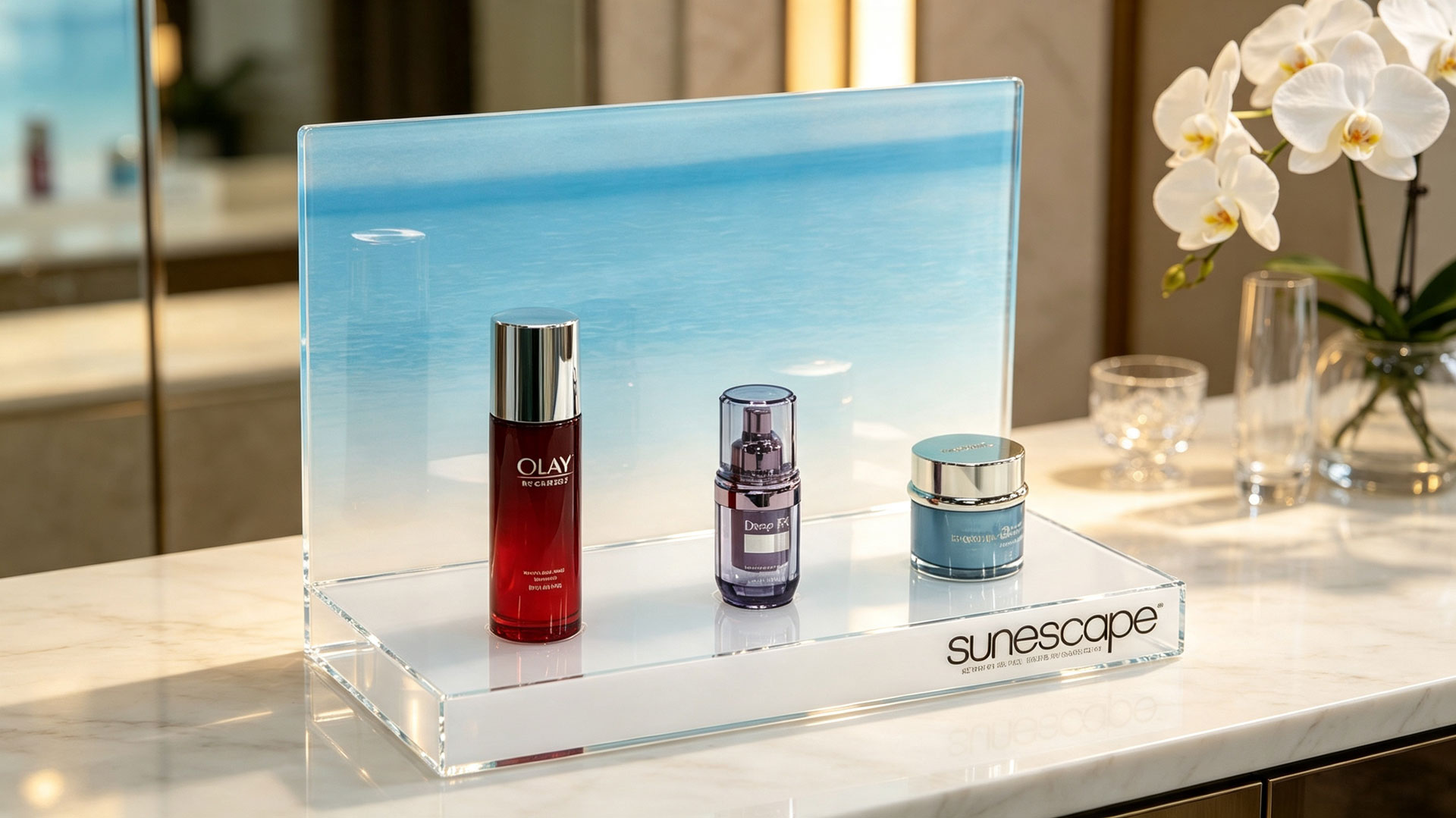
Beauty retail success heavily relies on in-store presentation, and high-quality acrylic cosmetic displays are the most cost-effective way to elevate product appeal. Many brand owners struggle to choose between OEM and ODM manufacturing modes, unsure which matches their budget, design needs, and business scale. This detailed breakdown solves your selection confusion with real retail-focused insights. This article serves as a dedicated subsection of our Custom Acrylic Cosmetic Displays Manufacturing Complete Guide, covering targeted selection rules missing in the general overview.
What You Will Learn in This Guide:
• Clear definitions and core differences between OEM and ODM acrylic display manufacturing
• Pros, cons, and applicable brand scenarios for each production mode
• Key comparison factors including cost, lead time, and customization flexibility
• Common cooperation risks and verified solutions for beauty brand buyers
• Stage-based selection tips for startup, mid-size, and mature beauty brands
Core Definition: OEM vs ODM Acrylic Cosmetic Displays
What Is OEM Acrylic Cosmetic Display Manufacturing
OEM acrylic display manufacturing refers to original equipment manufacturing. In this mode, you hold full design control of your acrylic cosmetic displays. You provide complete design drawings, structural requirements, color standards, and branding details to the factory.
The manufacturer only acts as a production executor. They strictly follow your specifications to produce finished products without any design modification. All design rights belong exclusively to your beauty brand.
What Is ODM Acrylic Cosmetic Display Manufacturing
ODM acrylic display manufacturing means original design manufacturing. The factory owns mature, pre-designed acrylic display templates for beauty retail. These ready-made designs fit most cosmetic product layouts and counter styles.
As a brand buyer, you can directly adopt standard designs or make minor custom tweaks. Common adjustments include logo printing, size fine-tuning, and surface finishing changes to match your brand tone.
Core Fundamental Difference Between OEM and ODM
The biggest distinction lies in design ownership and initiative. OEM starts from zero with your exclusive design, while ODM builds on the factory’s existing proven designs.
Simply put, OEM is “you design, factory produces”, and ODM is “factory designs, you select and adjust”. This single difference leads to huge gaps in cost, lead time, and brand uniqueness.
In-Depth Pros and Cons of OEM Acrylic Displays for Beauty Brands
Key Advantages of OEM Custom Acrylic Displays
OEM acrylic display solutions deliver unmatched brand exclusivity. Every structural detail, layer height, and display angle is tailored to your cosmetic products, whether it’s lipsticks, eyeshadows, or skincare bottles.
It supports full brand differentiation. Your in-store display will never be identical to competitors, helping you build a unique retail image and enhance customer brand memory in crowded beauty markets.
Visible Drawbacks and Limitations of OEM Cooperation
OEM manufacturing comes with higher overall costs. Custom design proofing, mold opening, and one-to-one production all require extra labor and material investment, raising the unit price compared to standard styles.
It also needs a longer production cycle. Design confirmation, sample testing, and mass production take more time, which is not friendly for brands with urgent store renovation or product launch schedules.
Ideal Brand Scenarios for Choosing OEM Service
OEM is perfect for mature beauty brands with fixed brand positioning and high-end retail positioning. Brands that focus on offline counter image building can maximize display uniqueness via OEM.
It also suits brands with special product sizes or exclusive store decoration styles that cannot be matched by universal standard acrylic cosmetic displays.
In-Depth Pros and Cons of ODM Acrylic Displays for Beauty Brands
Key Advantages of ODM Standard & Modified Displays
ODM acrylic display options feature ultra-fast delivery and cost efficiency. Factories have mature templates and stable production processes, eliminating long design and proofing cycles.
It supports low MOQ orders, making it ideal for small-batch trial sales and new store opening demands. Minor custom modifications also balance uniformity and brand recognition perfectly.
Potential Shortcomings of ODM Cooperation Mode
The main downside is low design exclusivity. The same ODM template can be sold to multiple beauty brands, leading to homogeneous offline display experiences in retail malls.
Customization limits exist in ODM mode. You cannot adjust core structures or change overall styles freely; you can only modify surface details and partial sizes within fixed ranges.
Ideal Brand Scenarios for Choosing ODM Service
ODM is the best choice for startup beauty brands and emerging labels with limited budgets. It helps new brands complete professional retail display layouts with low trial costs.
It also fits brands with frequent product iterations and temporary promotion displays, which do not require long-term exclusive display design investment.
Direct Comparison: OEM vs ODM Acrylic Displays (Key Brand Concerns)
|
Comparison Dimension
|
OEM Acrylic Display
|
ODM Acrylic Display
|
|---|---|---|
|
Customization Flexibility
|
Full custom, zero limitation
|
Partial custom, fixed core structure
|
|
Production Lead Time
|
Long (15–25 working days)
|
Short (7–12 working days)
|
|
Unit Cost & MOQ
|
Higher price, higher MOQ
|
Lower price, low MOQ support
|
|
Design Exclusivity
|
100% brand exclusive
|
Shared template, non-exclusive
|
|
Applicable Stage
|
Mature & high-end brands
|
Startup & fast-iteration brands
|
Comparison of Customization Flexibility & Brand Uniqueness
OEM mode provides full-dimensional customization. You can adjust display layers, partition sizes, material thickness, and lighting layouts according to your product display priorities.
ODM only supports secondary optimization on existing templates. It cannot realize personalized structural innovation, so brand uniqueness is relatively weak in offline retail competition.
Comparison of Cost, MOQ and Production Cycle
ODM acrylic display wins in cost and efficiency. No mold development and repeated proofing costs greatly reduce overall expenditure, and low MOQ avoids inventory pressure for small brands.
OEM requires independent mold opening and repeated sample confirmation, leading to higher costs and longer cycles, but ensures every detail matches the brand's high-end positioning.
Comparison of Product Iteration and Market Adaptability
ODM adapts better to fast market iterations. When you launch new cosmetic products, you can quickly replace matching standard display styles with low update costs.
OEM suits long-term stable product lines. Once customized, the display structure is fixed, making it more suitable for classic products with stable packaging and sizes.
How to Choose: Match OEM/ODM Mode With Your Brand Stage
Start-up Beauty Brands: Low Budget & Small Batch Demand
New beauty brands with limited initial capital should prioritize ODM solutions. It helps you build professional retail display scenes with low investment and short lead time.
You can test market feedback through small-batch acrylic cosmetic displays without bearing high custom design risks and sunk costs.
Mid-Size Growing Brands: Balancing Cost and Customization
Growing brands can adopt a mixed strategy. Use ODM standard displays for daily conventional product displays to control costs.
Choose OEM acrylic display customization for core flagship products and counter core display areas to highlight brand characteristics and balance cost and image.
Mature Luxury Beauty Brands: High-End Custom & Exclusive Design Demand
High-end mature brands need exclusive OEM customization. Unique display design can polish brand luxury texture and form consistent offline brand visual recognition.
Exclusive design also avoids display homogenization with mass-market brands, helping maintain high-end brand positioning and consumer trust.
Common Pitfalls in OEM/ODM Acrylic Display Cooperation
Design Copyright and Exclusive Usage Risks
Many buyers face design leakage risks. Unregulated factories may resell your OEM custom designs or sell the same ODM templates to your direct competitors.
This leads to serious brand homogeneity and weakens your offline market competitive advantages invisibly.
Quality Instability of Batch Production
Batch quality differences are a common pain point. Small factories may use inferior acrylic materials or reduce polishing processes for mass production to cut costs.
The final finished displays will have scratches, blurred transparency, and uneven cutting edges, seriously affecting retail display aesthetics.
Delivery Delay and After-Sales Responsibility Ambiguity
Many suppliers give loose delivery commitments. Once orders are backlogged, they will delay delivery without clear compensation measures, affecting your store opening and promotion plans.
After-sales problems such as damaged transportation and defective products often have ambiguous responsible parties, increasing brand operation costs.
FAQ
Q1: Will ODM acrylic display designs be shared with other competing beauty brands, leading to homogenization?
A: We provide timed exclusive design protection for all ODM orders. After your purchase, we will lock the adjusted template for 6 months and will not sell the same modified style to local competing beauty brands in your market area.
Q2: If I choose OEM full customization, will the supplier resell my exclusive display design to third-party brands?
A: We sign a formal design copyright non-disclosure contract for all OEM custom orders. All your design files and finished styles are strictly confidential, and we bear full legal liability for any design leakage behavior.
Q3: Will small-batch OEM orders face inflated unit prices or hidden service fees?
A: We offer a one-time full quotation for all OEM orders. The quotation clearly lists the design fee, mold fee, production fee, and packaging fee, with zero hidden charges. Small-batch orders will only generate standard fixed costs without arbitrary price hikes.
Q4: Can I adjust the display structure and brand logo details midway through OEM/ODM production?
A: We support free minor detail adjustments before mass production. Logo size, printing position, and surface color can be modified for free. For major structural changes, we will provide a clear incremental cost list for your confirmation before adjustment.
Q5: How to avoid unqualified acrylic display quality that cannot meet retail counter display standards?
A: We implement a 100% pre-delivery full inspection. Every finished display passes transparency detection, edge polishing inspection, and load-bearing test. We will send inspection videos and photos for your confirmation before delivery.
Q6: What if the customized display cannot adapt to my new product packaging or store renovation in the future?
A: We provide permanent free modification consultation. For all completed orders, our team offers professional display transformation suggestions for your new products or store upgrades, and supports low-cost partial renovation and accessory replacement services.
Conclusion
Choosing between OEM and ODM acrylic cosmetic displays ultimately depends on your beauty brand’s development stage, budget scale, and retail positioning. ODM is the most cost-effective choice for startup and growing brands that pursue fast iteration and low trial costs with reliable display effects.
For high-end, mature beauty brands that prioritize brand exclusivity and long-term offline image building, OEM acrylic display full customization is the optimal solution to stand out in competitive retail markets.
Avoid blindly pursuing full customization or overly compromising on standard styles. The best display solution is the one that perfectly matches your brand’s current operational needs and future development plans.
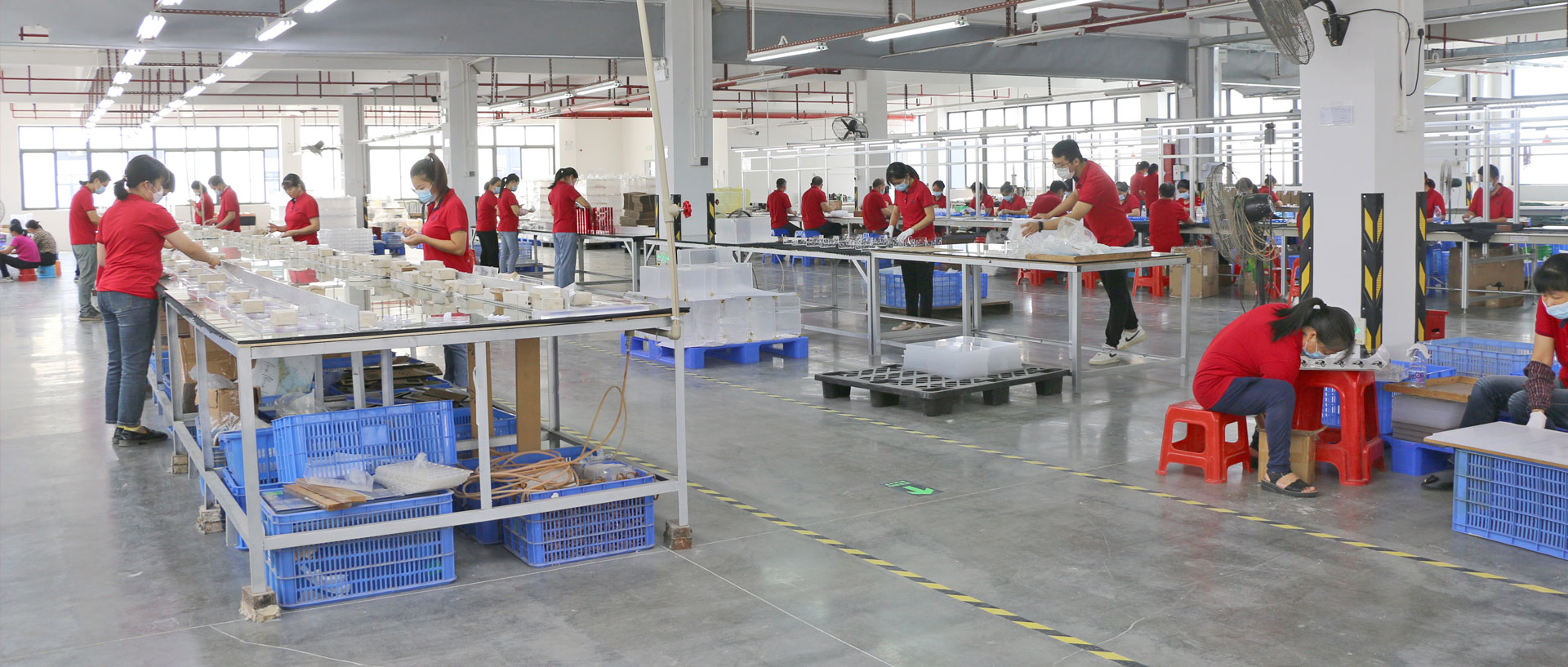
If you are still struggling with mode selection and scheme matching, turn to JAYI Acrylic.
As a professional custom acrylic display factory focusing on beauty retail, we provide one-stop OEM and ODM solutions.
With strict quality control, transparent pricing, and risk guarantee services, we help global beauty brands create high-value and highly competitive retail display scenes.

Cathy Qin works at Jayi Acrylic Industry Limited, focusing on custom acrylic product management and SEO-driven content marketing for B2B wholesale and retail applications. Her work includes designing display solutions, managing customization projects, and optimizing website content to promote Jayi’s high-quality acrylic products across global digital channels.
Post time: Aug-03-2026