
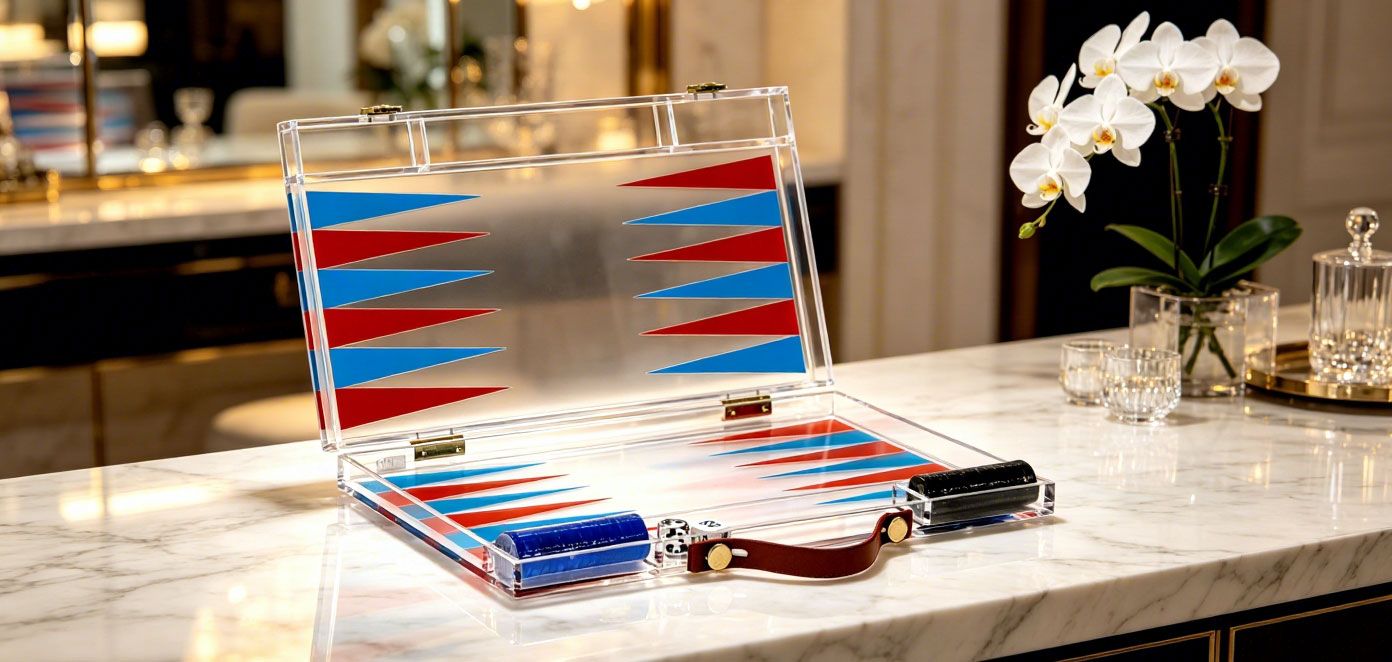
Hospitality projects demand backgammon game products that survive high-frequency guest use while maintaining the visual standards your property requires. Material selection directly impacts replacement cycles, housekeeping workload, and long-term operational costs—yet many procurement decisions default to wood without systematic evaluation of alternatives.
This comparison examines acrylic and wood backgammon through the lens of hospitality realities: humidity exposure in coastal properties, salt air corrosion, cleaning protocols, and the often-overlooked total cost of ownership that extends far beyond initial unit pricing. We draw from our experience supplying game products to hospitality programs to give you actionable data, not marketing impressions.
Key Points:
• Acrylic outperforms wood in humidity, salt air, and high-frequency use scenarios common to hospitality
• Total cost of ownership analysis reveals acrylic's economic advantage over typical 3-5 year project cycles
• Material selection should vary by hospitality zone based on environmental stressors
• Customization capabilities differ significantly between materials, affecting brand alignment options
• Structured evaluation criteria help procurement teams make defensible material decisions
Why Hospitality Projects Need a Material-First Approach to Backgammon Selection
Material choice determines replacement frequency, guest satisfaction, and operational cost in ways that consumer purchase decisions never encounter. A hotel backgammon set may see hundreds of guest interactions monthly, exposure to diverse cleaning agents, and environmental conditions ranging from air-conditioned lobbies to humid poolside areas. A residential backgammon set, by contrast, serves one household under controlled conditions.
Hospitality environments impose stresses on game products that consumer settings simply don't create. Guests handle products without ownership investment, housekeeping teams clean with commercial-grade agents, and environmental controls vary dramatically by property zone. These factors compound over time—products that seem equivalent at the point of purchase reveal significant performance gaps within 12-18 months of deployment.
Buyers who evaluate backgammon purely on aesthetics or initial cost often face unexpected replacement orders, maintenance calls, and guest complaints about product condition. A material-first approach shifts evaluation criteria toward durability, maintenance requirements, and lifecycle cost. This framework serves procurement teams better than aesthetic-driven selection processes that ignore operational realities.
The analysis that follows compares acrylic and wood backgammon across the dimensions that matter most for hospitality applications. Data-driven comparisons replace general impressions, and zone-specific guidance replaces one-size-fits-all recommendations.
Acrylic vs Wood Backgammon — Material Performance in Hospitality Environments
Durability Under High-Frequency Guest Use
Hospitality durability requirements exceed what residential use demands by an order of magnitude. Products must maintain appearance and functionality through hundreds of monthly interactions from guests with varying handling care levels.
Acrylic delivers superior durability through its homogeneous material structure. Unlike wood, which contains grain lines and natural weakness points, cast acrylic forms consistent molecular bonds throughout the material. This uniformity means acrylic resists the splitting, cracking, and chipping that plague wood products under stress. Our acrylic backgammon pieces undergo 100% full inspection before shipment, ensuring each component meets durability standards suitable for demanding applications.
Wood backgammon develops wear patterns that accelerate deterioration. Corners round from impact, playing surfaces accumulate scratches that affect dice roll behaviour, and joints loosen as natural expansion and contraction cycles stress connection points. Properties report wood set replacements every 2-4 years under normal hospitality use, compared to 5-8 year service lives we observe with quality acrylic products.
The weight difference between materials also affects durability in practice. Heavier wood pieces may stay in place better on lobby tables, but create damage risks when dropped or when furniture shifts. Lighter acrylic pieces handle impact better through material flexibility rather than brittle failure.
Humidity, Salt Air, and Climate Resistance
Environmental resistance separates materials that thrive in diverse hospitality settings from those that deteriorate prematurely. Coastal resorts, tropical properties, and indoor pools face humidity challenges that test material stability daily.
Acrylic absorbs less than 0.5% moisture by weight, maintaining dimensional stability regardless of ambient conditions. This resistance means acrylic backgammon boards don't warp, swell, or delaminate when humidity fluctuates. The material maintains consistent dimensions and component fit through seasonal changes that stress wood alternatives.
Wood's natural porosity creates vulnerability to moisture absorption. Humid environments cause wood fibers to expand, leading to warping in flat surfaces and binding in sliding components. Coastal properties face accelerated deterioration as salt air settles on surfaces and penetrates wood grain, corroding internal fibers and finish coatings. Wood backgammon in these environments often requires climate-controlled storage and regular maintenance interventions to extend serviceable life.
Tropical and subtropical hospitality markets should weigh humidity resistance heavily in material decisions. Properties in these regions report 40-60% shorter wood product lifespans compared to controlled interior environments. Acrylic's environmental stability eliminates this variable from operational calculations.
Cleaning and Maintenance Requirements
Housekeeping efficiency matters for operational cost management in ways that product specifications don't always capture. Cleaning protocols directly affect staff time, supply costs, and product longevity.
Acrylic accepts standard hospitality cleaning agents without damage. Isopropyl alcohol solutions (70% concentration), ammonia-based glass cleaners, and mild soap solutions all clean acrylic surfaces effectively. The non-porous surface resists staining and doesn't harbor bacteria in surface imperfections. Routine cleaning requires only soft microfiber cloths—nothing specialized or expensive.
Wood backgammon requires more careful cleaning agent selection. Many commercial cleaners contain chemicals that strip wood finishes or penetrate grain to cause staining. Properties report frustration with spotting, streaking, and finish degradation from inappropriate cleaning agents. Specialized wood cleaners add supply costs and training requirements that acrylic doesn't impose.
Beyond daily cleaning, wood products require periodic maintenance that acrylic eliminates. Wood surfaces need refinishing every 12-24 months in hospitality environments to maintain appearance. Joints and connections require inspection and potential repair as natural movement stresses mechanical fastenings. Magnetic closures in wood boards corrode and require replacement. These maintenance demands accumulate cost and operational complexity that material comparison often overlooks.
Table: Material Performance Comparison
|
Criterion |
Acrylic Backgammon |
Wood Backgammon |
Hospitality Implication |
|
Durability Rating |
High (5-8 year hospitality lifespan) |
Moderate (2-4 year hospitality lifespan) |
Acrylic halves replacement frequency |
|
Moisture Resistance |
Excellent (<0.5% absorption) |
Poor (natural porosity) |
Critical for humid/coastal properties |
|
Scratch Resistance |
Good (surface hardness) |
Moderate (finish-dependent) |
Acrylic scratches less; wood finish fails |
|
Weight |
Moderate (easier handling) |
Heavy (better stability, more damage risk) |
Weight affects handling and storage |
|
Cleaning Protocol |
Standard hospitality cleaners |
Specialized wood cleaners |
Acrylic reduces supply and training costs |
|
Yellowing/Fading |
Minimal (95% light transmittance stable) |
Finish-dependent |
Acrylic maintains clarity longer |
|
Climate Stability |
Excellent in all zones |
Varies by environment |
Acrylic adapts; wood requires climate control |
Aesthetic and Brand Alignment Comparison
Visual Impact and Guest Perception
Guests form immediate impressions of game products based on visual weight, finish quality, and material authenticity. These impressions connect to broader brand positioning—modern properties projecting different aesthetics than classic establishments.
Acrylic offers distinctive visual characteristics that align with contemporary luxury positioning. The material's clarity and light-handling properties create visual interest that wood cannot replicate. Transparent acrylic pieces catch and refract ambient light, adding dynamism to product photography and social media capture. This visual appeal translates to guest engagement and organic brand exposure.
Wood carries inherent associations with traditional craftsmanship and classic aesthetics. Heritage hotel brands and properties positioning toward traditional luxury often favor wood products for their material authenticity and warmth. The grain patterns and color variations in quality hardwoods create visual richness that some properties prefer.
Neither material is inherently superior—the appropriate choice depends on brand positioning and property aesthetic. Contemporary hotels and resorts generally align better with acrylic's visual language, while traditional properties may find wood complements their established aesthetic more naturally.
Customization Capabilities for Property Branding
Brand-aligned customization extends beyond logo placement to encompass color palettes, finishes, and experiential details that reinforce property identity. Customization capabilities differ significantly between materials.
Acrylic supports comprehensive customization through multiple in-house production processes. Screen printing enables up to 8-color designs applied directly to acrylic surfaces with durability that resists scratching and fading. Laser engraving creates precise, permanent markings ideal for logos and fine details. UV digital printing handles photographic imagery and gradient designs that other methods cannot achieve. Hot stamping adds metallic accents and premium finishing touches.
Pantone color matching ensures brand color accuracy across production runs and reorders—a critical requirement for properties with strict brand guidelines. Custom sizes accommodate unique dimension requirements beyond standard specifications. Packaging customization transforms unboxing into brand experience moments.
Our custom acrylic backgammon set capabilities include all these options within our production facilities. We control quality from initial material selection through final packaging, ensuring consistency across order quantities from samples through full production runs.
Wood customization typically involves laser engraving, paint application, or wood burning techniques with more limited color options and higher setup costs for custom work. Finishing processes create bottlenecks in custom wood production, and color matching requires specialized coating formulation rather than standard material specifications.
For properties seeking distinctive brand-aligned products, acrylic delivers a broader customization range with more predictable production outcomes. Our acrylic board game collection demonstrates the design flexibility available for hospitality programs seeking differentiated product lines.
Total Cost of Ownership — Beyond the Unit Price
Replacement Cycle and Amortized Cost
Initial acquisition cost captures only a fraction of total product expense over multi-year project cycles. Hospitality buyers who evaluate products solely on unit price often face unexpected total costs that exceed projections significantly.
Quality acrylic and wood backgammon sets carry comparable initial pricing at equivalent quality levels. The cost divergence emerges over time through different service life expectations. Acrylic products maintain functionality and appearance for 5-8 years under normal hospitality use, while wood alternatives typically require replacement every 2-4 years. This difference doubles or triples replacement frequency, directly affecting per-year acquisition costs.
Amortized over a 5-year projection, acrylic delivers 30-50% lower per-year acquisition cost despite comparable initial pricing. Properties replacing wood sets twice in five years face double the acquisition expenditure plus the operational costs of replacement ordering, receiving, and deployment logistics.
Beyond replacement frequency, service life variation affects inventory planning. Shorter wood replacement cycles require more frequent procurement attention and complicate bulk ordering economics. Longer acrylic service lives enable larger order quantities that capture better unit pricing while reducing procurement administrative burden.
Operational Impact on Housekeeping and Maintenance Staff
Maintenance requirements translate directly to labor costs that initial pricing comparisons ignore. Housekeeping efficiency affects staffing calculations, scheduling flexibility, and staff satisfaction in ways that compound over time.
Acrylic's easy-clean properties reduce housekeeping time per product. The non-porous surface accepts standard cleaning protocols without special handling or training requirements. Stain removal from acrylic requires only appropriate cleaning agents—no specialized techniques or products needed. Surface damage risks are minimal, reducing inspection requirements before and after guest stays.
Wood products impose ongoing maintenance demands that accumulate staff time and supply costs. Daily cleaning requires careful agent selection to avoid finish damage. Periodic refinishing demands scheduling coordination and potentially external vendor engagement. Component repair and replacement (hinges, magnetic closures, loose joints) requires technical attention that acrylic doesn't demand.
Properties report that wood product maintenance consumes 2-3 times more staff time per product compared to acrylic alternatives. Over a portfolio of game products deployed throughout a property, this difference translates to meaningful staffing and supply budget impacts.
Table: Total Cost of Ownership Comparison (5-Year Projection)
|
Cost Factor |
Acrylic Backgammon |
Wood Backgammon |
Notes |
|
Initial Unit Cost |
$X (baseline) |
$X-$1.2X |
Comparable at equivalent quality |
|
Expected Lifespan |
5-8 years |
2-4 years |
Hospitality use conditions |
|
Replacement Frequency (5yr) |
1 time |
2-3 times |
Affects acquisition cost total |
|
Annual Maintenance Hours |
0.5-1 hour |
2-4 hours |
Housekeeping staff time |
|
Maintenance Supply Cost |
Standard cleaners only |
Specialized products |
Wood requires wood-specific supplies |
|
Refinishing/Repair Cost |
None |
$15-40 per unit |
Periodic wood maintenance |
|
5-Year Total Cost |
~1.2-1.5X initial |
~2.5-3.5X initial |
Acrylic delivers 40-60% savings |
Pricing varies based on specifications and volume.
Matching Backgammon Material to Hospitality Zones
Different areas within hospitality properties present distinct environmental challenges that should guide material selection. A uniform approach to product specification ignores the real variation in conditions that products experience throughout a single property.
Pool Areas and Outdoor Patios
UV exposure, chlorine or salt water proximity, and temperature variation characterize these zones. Acrylic's UV stability maintains appearance despite sun exposure that degrades wood finishes. Moisture resistance eliminates concerns about splash exposure or humidity fluctuation. These zones demand acrylic material selection—no wood specification can survive prolonged outdoor hospitality use.
Spa and Wellness Areas
High humidity, frequent cleaning with commercial disinfectants, and chemical exposure define this zone. Acrylic resists the cleaning agents that strip wood finishes and maintains dimensional stability despite persistent moisture. Properties report that wood products in spa areas deteriorate within 12-18 months—acrylic extends this timeline significantly.
Lobby and Common Areas
Climate-controlled environments reduce environmental stress, but high traffic and diverse guest handling create other durability demands. Both materials can perform adequately in these zones with appropriate maintenance. However, acrylic's scratch resistance and easy-clean properties reduce ongoing care requirements that lobby placement demands.
Guest Rooms
Variable occupancy patterns, diverse handling care levels, and limited housekeeping time per room characterize guest room environments. Acrylic's damage resistance handles unexpected guest use patterns that no one anticipates. Easy cleaning supports quick turnover protocols. Wood specification requires climate control and careful guest handling guidance that many properties cannot guarantee.
Restaurant and Bar Areas
Food and beverage exposure, frequent cleaning, and potential spill contact define these zones. Acrylic's chemical resistance handles cleaning agents and accidental spills without staining or damage. Wood absorbs liquid spills and requires immediate attention to prevent staining—attention that busy hospitality environments cannot always provide.
Table: Hospitality Zone Material Recommendations
|
Zone |
Primary Stressors |
Recommended Material |
Rationale |
|
Pool/Outdoor |
UV, moisture, temperature |
Acrylic |
UV stable, moisture resistant, no refinishing |
|
Spa/Wellness |
Humidity, chemicals, and cleaning |
Acrylic |
Chemical resistant, humidity stable |
|
Lobby/Common |
Traffic, handling variation |
Either (prefer acrylic) |
Acrylic reduces maintenance; wood is viable |
|
Guest Rooms |
Variable use, turnover speed |
Acrylic |
Damage-resistant, quick cleaning |
|
Restaurant/Bar |
Spills, chemicals, frequency |
Acrylic |
Stain-resistant, chemical-stable |
JAYI's Acrylic Backgammon Manufacturing for Hospitality Programs
Buyers evaluating custom backgammon sets for hospitality applications benefit from understanding production capabilities that affect quality consistency, supply reliability, and customization feasibility.
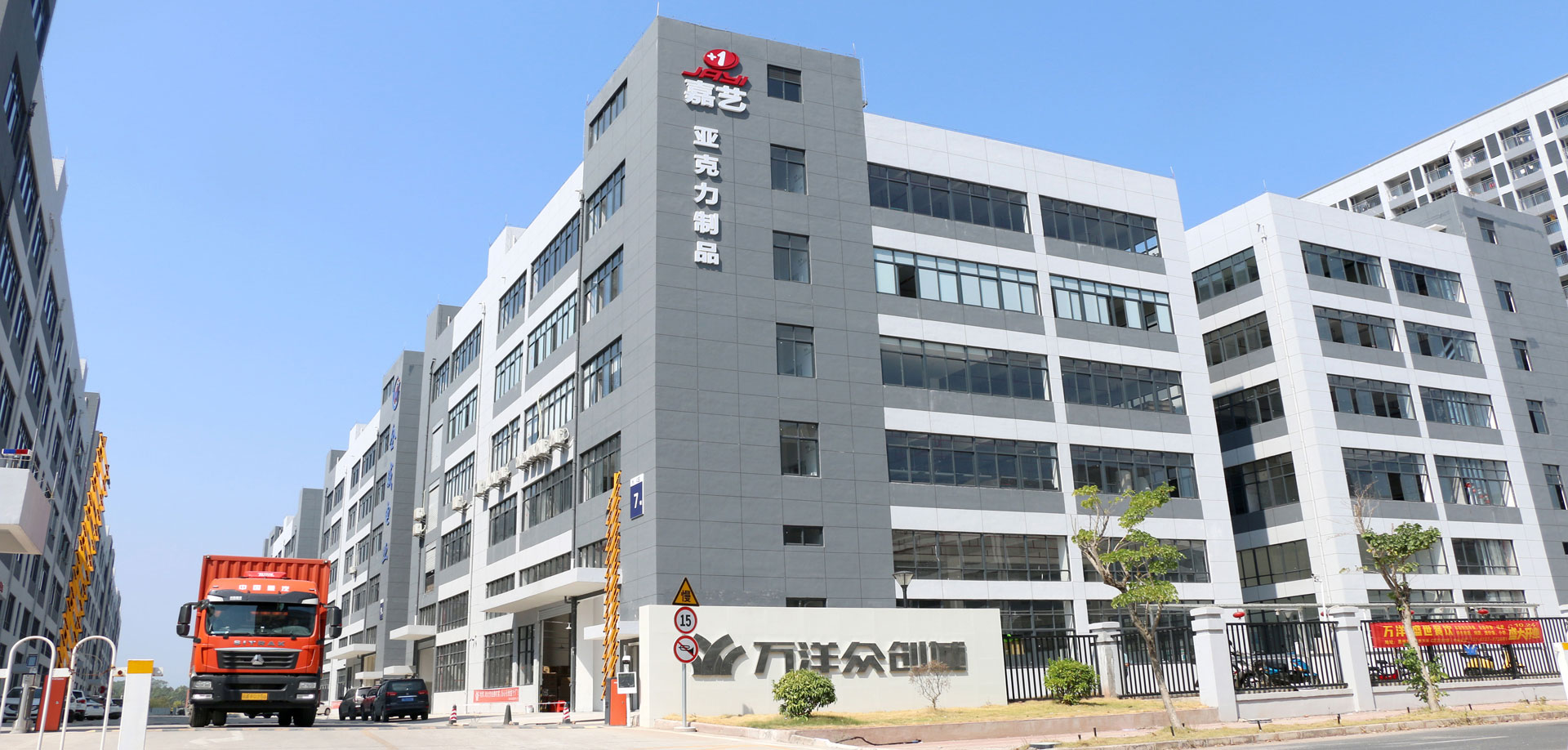
Jayi Acrylic has a 10,000 square meter production facility in China, and produces over 300,000 acrylic game products annually across our manufacturing lines. This capacity supports hospitality programs ranging from initial samples through ongoing replenishment orders without the production bottlenecks that limit smaller manufacturers. Annual output exceeding 70 million RMB across all product categories demonstrates operational scale that hospitality procurement teams can rely upon.
Quality systems supporting hospitality requirements include ISO9001 certification, BSCI and SEDEX social compliance audits, and successful completion of Walmart and Target supplier audits. These credentials matter for properties with corporate social responsibility requirements and ESG reporting obligations. Our QC protocols include 100% full inspection of all products before shipment, with third-party inspection supported for buyers requiring additional verification.
Material specifications serving hospitality applications begin with 100% virgin acrylic—our products contain no recycled material that compromises durability, clarity, or color consistency. The 95% light transmittance our acrylic achieves ensures visual appeal that enhances guest experience and supports brand positioning. Pantone color matching enables brand-aligned specification while maintaining production consistency across order quantities.
Production processes executed in-house span the full manufacturing sequence: cutting, CNC engraving, diamond polishing, bonding, screen printing, and packaging. This vertical integration eliminates quality gaps that occur when manufacturers outsource process steps. Screen printing capabilities accommodate up to 8 colors with registration precision that supports complex brand designs.
Our client relationships demonstrate hospitality market capability. Properties sourcing through major retailers, department store programs, and specialty hospitality suppliers have established specifications with our production team. The consistency requirements these relationships impose—identical appearance across thousands of units, precise brand color matching, reliable replenishment availability—reflect the operational discipline hospitality procurement demands.
For hospitality buyers exploring custom acrylic backgammon options, our sampling process delivers samples within 3-7 days, with production runs completing in 15-35 days, depending on specification complexity. This timeline supports project planning for new property openings, renovation programs, and seasonal product rotations.
Explore our complementary custom acrylic mahjong set, custom acrylic chess set, and custom acrylic tumbling tower options for hospitality programs seeking broader game product portfolios. Consistent material quality across product categories simplifies housekeeping training, spare parts inventory, and brand aesthetic alignment.
Decision Checklist — Acrylic vs Wood Backgammon for Your Hospitality Project
Evaluate your specific project parameters against these criteria to determine the appropriate material selection:
1. Property Location: Is the property in a coastal, tropical, or high-humidity region? If yes, acrylic's moisture resistance becomes critical.
2. Deployment Zone: Will products serve pool areas, spas, outdoor patios, or other moisture-prone locations? These zones demand acrylic specification.
3. Guest Room Placement: Are products designated for guest rooms with variable occupancy patterns? Acrylic's damage resistance suits this application.
4. Climate Control Availability: Do indoor deployment areas have consistent climate control? Without it, wood products will deteriorate faster.
5. Housekeeping Protocols: Are cleaning crews trained on specialized wood care? If not, acrylic's standard-clean advantage applies.
6. Maintenance Budget: Does the operational budget support periodic wood refinishing and component replacement? If the budget is constrained, acrylic's lower maintenance demands matter.
7. Replacement Cycle Preference: Does procurement planning prefer longer replacement intervals? Acrylic's 5-8 year service life exceeds wood's 2-4 year expectation.
8. Brand Positioning: Does the property position itself as contemporary/modern or traditional/classic? Contemporary brands align better with acrylic aesthetics.
9. Customization Requirements: Does the project require specific brand colors, logos, or unique dimensions? Acrylic offers broader customization capability.
10. Volume Requirements: Are order quantities large enough to benefit from bulk pricing? Larger orders favor acrylic's consistent quality across quantities.
11. Social Compliance Requirements: Do procurement specifications require BSCI, SEDEX, or similar certifications? Verify manufacturer credentials match requirements.
12. Supply Reliability: Does the project timeline require reliable replenishment availability? Production scale affects supply predictability for ongoing programs.
For most hospitality applications, these criteria favor acrylic specification. Properties with controlled indoor environments, traditional brand positioning, and robust maintenance capabilities may find wood suitable for specific zones. Use this framework to build a defensible procurement decision that accounts for operational realities rather than aesthetic assumptions alone.
FAQ

Is acrylic backgammon more durable than wood for hotel use?
Acrylic backgammon demonstrates superior durability in hospitality environments compared to wood alternatives. The homogeneous material structure eliminates grain weakness points that cause wood to split or crack under stress. High-frequency guest use—where products may be handled hundreds of times monthly—wears acrylic surfaces evenly rather than creating the uneven wear patterns common to wood finishes. For properties seeking products that maintain appearance through extended service cycles, acrylic delivers measurable durability advantages.
How does humidity affect wood vs acrylic backgammon in coastal resorts?
Coastal hospitality environments present significant challenges for wood products through persistent humidity and salt air exposure. Wood absorbs atmospheric moisture, leading to warping, swelling, and eventual delamination of laminated components. Acrylic absorbs less than 0.5% moisture by weight, maintaining dimensional stability regardless of ambient humidity levels. Salt air accelerates corrosion of wood finishes and metal components (hinges, magnetic closures) while acrylic surfaces resist salt spray without special treatments. Properties in tropical, beach, or high-humidity regions should factor in humidity resistance as a primary selection criterion.
What cleaning products are safe for acrylic backgammon sets in hospitality settings?
Acrylic backgammon accepts cleaning with standard hospitality-grade disinfectants, including isopropyl alcohol solutions (70% concentration), ammonia-based glass cleaners, and mild soap solutions. Avoid abrasive scrubbers, acetone, and petroleum-based solvents that can damage acrylic surfaces. Our manufacturing process produces pieces with 95% light transmittance and smooth finishes that resist staining. Routine cleaning requires only soft microfiber cloths and appropriate cleaning solutions. Wood backgammon typically requires specific wood cleaners and periodic refinishing treatments that increase maintenance complexity and cost.
Can acrylic backgammon be customized with hotel logos and brand colors?
Acrylic backgammon offers extensive customization capabilities that exceed wood alternatives for most branding applications. Our in-house production supports screen printing (up to 8 colors), laser engraving, UV digital printing, and hot stamping processes that apply logos, patterns, and branding directly to acrylic surfaces. Pantone color matching ensures brand color accuracy across production runs. Size customization accommodates standard tournament specifications or unique dimension requirements. Wood customization typically involves laser engraving or paint application with more limited color options and higher setup costs for custom work.
How does the total cost of ownership compare between acrylic and wood backgammon for hospitality?
Total cost of ownership analysis typically favors acrylic over 3-5 year hospitality project cycles. Initial acquisition costs for quality acrylic backgammon are comparable to hardwood alternatives, but acrylic's longer service life (5-8 years under hospitality use vs 2-4 years for wood) reduces replacement frequency. Maintenance requirements differ significantly: acrylic needs only routine cleaning while wood requires periodic refinishing, component replacement, and humidity control measures. When factoring in reduced housekeeping time and fewer replacement orders, acrylic delivers 25-40% lower 5-year total cost of ownership in typical hospitality applications. Pricing varies based on specifications and volume.
Which hospitality zones are best suited for acrylic backgammon vs wood?
Different areas within hospitality properties present distinct environmental challenges that should guide material selection. Acrylic performs optimally in pool areas, spa zones, outdoor patios, and high-humidity environments where wood deterioration accelerates. Wood may serve appropriately in controlled indoor environments like climate-controlled lobby lounges or private event spaces where humidity remains stable, and guest turnover is moderate. Guest rooms with variable occupancy patterns benefit from acrylic's damage resistance and easy-clean properties. The matching framework in this article provides zone-specific recommendations based on environmental stressor profiles.
Conclusion
For hospitality backgammon selection, acrylic is the more practical and cost-effective choice for most scenarios, especially in high-humidity, coastal, outdoor, and high-traffic zones.
It delivers stronger durability, easier cleaning, better climate resistance, richer customization, and lower long-term total cost of ownership.
Wood remains an option only for strictly climate-controlled, low-stress indoor areas with traditional positioning.
With JAYI’s stable production and full customization, acrylic backgammon can reliably elevate guest experience and reduce operational costs for hotels and resorts.

Cathy Qin
Cathy Qin works at Jayi Acrylic Industry Limited, focusing on custom acrylic game product management and SEO-driven content marketing for B2B wholesale and retail applications. Her work includes designing display solutions, managing customization projects, and optimizing website content to promote Jayi’s high-quality acrylic products across global digital channels.
Post time: May-22-2026