
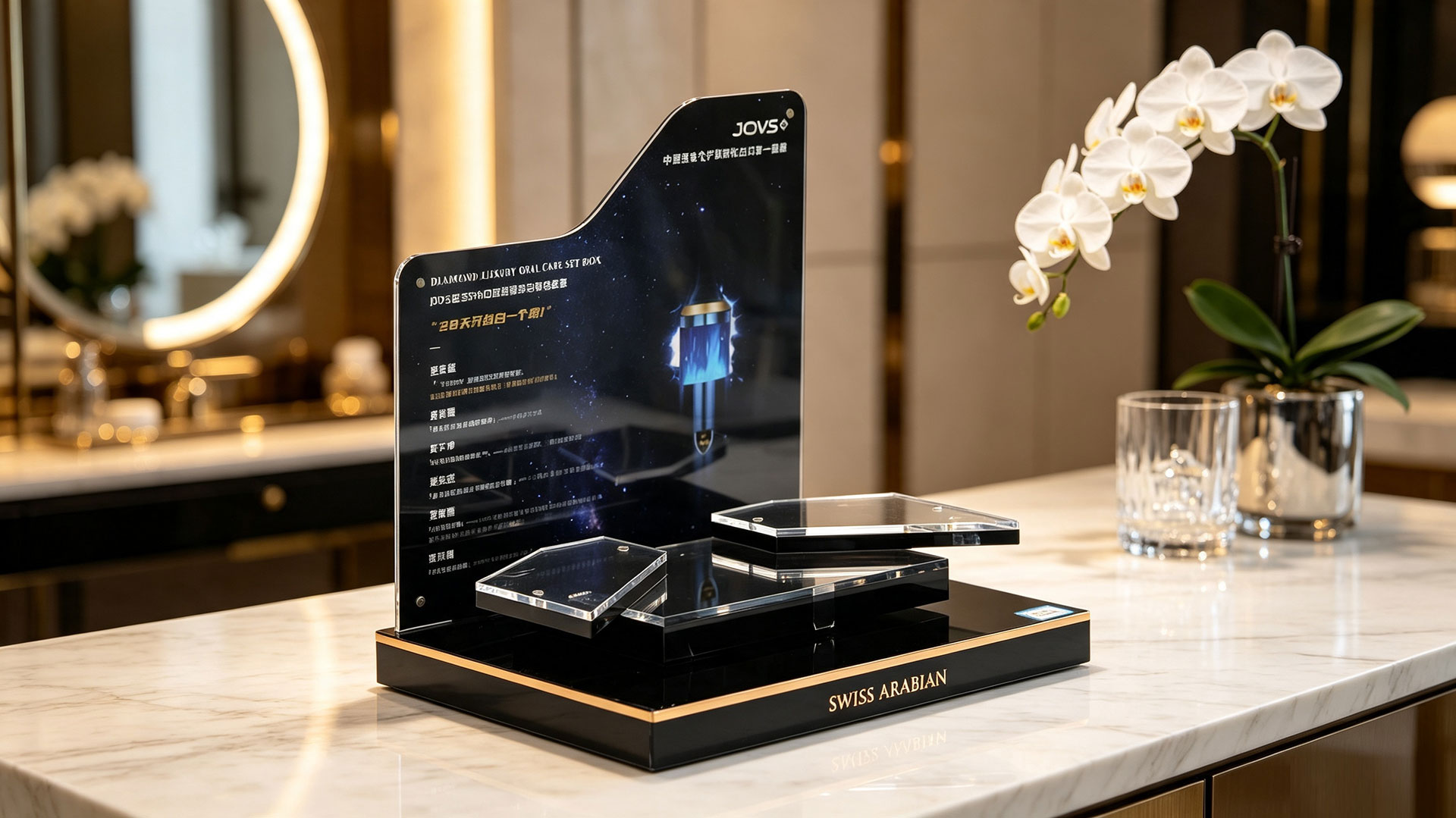
Every retail, jewelry, cosmetic, and electronics brand sourcing display racks faces the same core puzzle: how to pick suitable acrylic manufacturing crafts to match product positioning and procurement budgets. Diverse acrylic display processing technologies create fully personalized, premium custom acrylic display stands, yet most overseas buyers lack clear benchmarks to judge each craft’s pros, cons, and pricing.
This article breaks down all mainstream and personalized processing techniques one by one, compares their visual effects, usable scenarios and cost ranges, and shares practical selection logic for small-batch sampling and mass production. This page is a dedicated subsection of our complete industry resource: Custom Acrylic Displays Manufacturing Complete Guide, where you can check full knowledge covering raw material selection, sampling, quality inspection, and export logistics for acrylic custom orders.
Key Takeaways of This Guide:
● Master 6 mainstream acrylic manufacturing crafts and 3 personalized custom processing techniques
● Clear comparison table of visual effect, applicable industry and cost tier for all processes
● Step-by-step process matching rules for low, mid, and high-end acrylic display stands
● Buyer risk-focused FAQ addressing common procurement worries with clear factory commitments
● Practical tips to eliminate unnecessary budget waste when ordering custom acrylic display stands
Why Standardized Design & Sampling Matters for Custom Acrylic Display Stands
Custom acrylic display stands have replaced wooden, metal, and ordinary plastic racks across global retail and exhibition spaces, thanks to their high light transmittance, lightweight structure, and strong custom plasticity. No single processing craft can meet all brand display needs, which is why factories equip themselves with full sets of acrylic display processing technologies to enable flexible customization.
Realize full personalized and high-end commercial customization
Different brands carry distinct visual positioning: luxury jewelry requires seamless, scratch-free surfaces, while fast-fashion cosmetics prioritize low-cost detachable structures. Varied acrylic manufacturing techniques allow manufacturers to adjust surface texture, shape, branding, and assembly methods according to brand requirements, rather than offering one-size-fits-all standard displays.
Process selection directly shapes final display presentation effect
The same transparent acrylic sheet will deliver totally different visual results under different processing flows. A roughly cut acrylic panel with no polishing looks cheap and dull; fine polishing and seamless bonding deliver mirror-grade smoothness that elevates product value. Choosing the wrong craft will ruin brand display effects even with premium acrylic raw materials.
Scientific craft matching cuts unnecessary procurement budget waste
Many overseas buyers overspend by picking high-end hot bending or seamless bonding for simple supermarket commodity displays, or select low-cost rough cutting for high-end jewelry counters. Learning the gap between each acrylic manufacturing craft’s cost standard lets buyers match processes to their display grade and avoid extra spending on redundant premium techniques they do not need.
Full Breakdown of Mainstream Acrylic Manufacturing Crafts
Six core acrylic manufacturing crafts dominate the custom acrylic display stands industry. Each covers an indispensable production link from blank shaping to surface branding, with independent applicable scenarios and cost positioning.
Precision Cutting: Basic blank forming process for all acrylic displays
Precision cutting is the first step of every acrylic display production, using CNC cutting machines or laser cutting tools to split whole acrylic sheets into pre-designed sizes and shapes.
● Advantages: High dimensional accuracy, supports regular rectangles and irregular special outlines, fast production speed
● Applicable scenarios: All basic acrylic display frames, layered shelves, flat display panels
● Cost tier: Lowest baseline cost among all acrylic display processing technologies
This craft only shapes raw materials and cannot deliver smooth edges or three-dimensional shapes alone. All cut acrylic parts need secondary processing like polishing or bonding before finishing.
Fine Polishing: Premium surface edge treatment to boost texture
After precision cutting, acrylic edges stay frosted and opaque. Fine polishing removes rough cutting traces to restore full transparency of acrylic edges, split into flame polishing and diamond mechanical polishing.
● Flame polishing: Low cost, suitable for thin acrylic sheets under 8mm, minor yellowing risk on thick plates
● Diamond polishing: High precision, zero yellowing, mirror smooth edges, perfect for high-end jewelry displays
● Applicable scenarios: Beauty counters, watch display stands, exhibition high-end acrylic racks
● Cost tier: Medium cost; diamond polishing adds 20%-40% extra expense vs basic flame polishing
High-Temperature Hot Bending: Craft for three-dimensional curved acrylic molding
High-temperature hot bending heats acrylic sheets to softening temperature, then molds them into curved, arc, or folded shapes with custom molds, creating stereoscopic display structures that flat cutting cannot achieve.
● Advantages: Integrated curved appearance with no splicing gaps, strong visual sense of premium quality
● Limitations: Custom molds add one-time sampling cost, longer production lead time for complex curves
● Applicable scenarios: Curved cosmetic display counters, arched exhibition sign stands, curved phone display holders
● Cost tier: Medium-high; large or multi-curve designs push costs further upward
Integrated Bonding & Brand Marking Processing Crafts
After shaping acrylic blanks, bonding and printing crafts assemble components and add brand logos, two core finishing steps for finished custom acrylic display stands.
Seamless Bonding: Integrated assembly without visible glue gaps
Seamless bonding uses specialized acrylic glue and fixed clamping fixtures to connect multiple acrylic parts, eliminating obvious glue lines and bubbles common in ordinary manual gluing.
● Standard gluing: Thin glue lines, visible bonding marks, for low-budget supermarket displays
● Seamless bonding: Invisible joint lines, fully transparent connection surfaces, no overflow glue residue
● Applicable scenarios: Luxury jewelry display cabinets, high-end retail layered acrylic racks
● Cost tier: Medium-high, requires professional operators and longer curing time per product
Screen Printing: Mass pattern and logo printing for flat acrylic surfaces
Screen printing transfers brand texts, patterns and color blocks onto flat acrylic surfaces in batch production, the most widely used marking craft for mass orders.
● Advantages: Stable color fastness, low unit cost for bulk orders, supports solid color brand logos
● Limitations: Cannot achieve ultra-fine tiny patterns, only flat surface printing available
● Applicable scenarios: Supermarket commodity display racks, mass cosmetic promotional stands
● Cost tier: Low-medium; unit printing cost drops sharply for orders over 500 pieces
Laser Engraving: High-precision permanent text and pattern carving
Laser engraving etches patterns, serial numbers, and fine brand logos into acrylic panels via laser beams, leaving permanent matte marks that never fade or peel off.
● Advantages: Supports ultra-fine complex patterns, works on curved hot-bent acrylic surfaces, zero ink shedding risk
● Limitations: Higher unit cost than screen printing for large-area full-color patterns
● Applicable scenarios: Luxury watch displays, limited-edition product acrylic stands, customized brand nameplates
● Cost tier: Medium cost; charged by engraved pattern area and detail complexity
Personalized Custom Processing Technologies for Unique Displays
Beyond the six mainstream acrylic manufacturing crafts, three supplementary personalized processing techniques further upgrade the uniqueness and practicality of custom acrylic display stands, ideal for brands pursuing differentiated store visuals.
Custom LOGO Printing: Multi-process brand marking matching different budgets
Custom LOGO printing combines screen printing, laser engraving, and UV printing to fit different brand demands. UV printing is a popular upgrade option for gradient color logos, which screen printing cannot achieve. Brands can mix low-cost screen printing for mass orders and laser engraving for limited premium product lines.

Embossing Process: Add three-dimensional texture to acrylic surfaces
Embossing creates a concave-convex texture on acrylic panels via mold pressing, adding tactile three-dimensional effects to flat display surfaces. This craft makes brand logos or decorative patterns stand out visually, greatly improving store grade. It is mostly applied to cosmetic brand-exclusive display counters and gift box acrylic display bases.
Magnetic Assembly: Detachable structural design for shipping & reuse
Magnetic assembly embeds invisible small magnets inside acrylic parts, allowing the whole display stand to be disassembled and assembled without glue or screw fasteners. Detachable structures cut shipping volume and reduce cross-border transportation fees, perfect for brands participating in multiple periodic exhibitions. Magnetic assembly slightly raises production costs but lowers long-term logistics expenses for repeated use.
Comparative Table of All Acrylic Processing Technologies (Effect, Scenario, Cost)
This table centralizes core indicators of all acrylic display processing technologies, helping buyers quickly filter matching crafts based on their own display grade and budget:
| Processing Craft | Core Visual Effect | Best Applicable Industry | Relative Cost Tier |
|---|---|---|---|
| Precision Cutting | Flat basic acrylic blank, frosted raw edges | All industries (pre-processing step) | Low |
| Fine Polishing (Flame) | Transparent smooth edges, slight thin plate yellowing | Cosmetics, daily goods retail | Low-Medium |
| Fine Polishing (Diamond) | Mirror fully transparent edges, zero yellowing | Jewelry, watches, luxury electronics | Medium |
| High-Temperature Hot Bending | Smooth integrated curved 3D shapes | Cosmetic counters, exhibition signage | Medium-High |
| Seamless Bonding | Invisible joint lines between acrylic parts | High-end retail fixed display cabinets | Medium-High |
| Screen Printing | Solid color flat brand logos, stable color fastness | Mass supermarket, fast fashion retail | Low-Medium |
| Laser Engraving | Permanent matte fine patterns, no ink shedding | Luxury limited product displays | Medium |
| Custom UV LOGO Printing | Gradient full-color brand graphics | Mid-range beauty brand displays | Medium |
| Embossing | 3D concave-convex surface texture | Exclusive brand high-end counters | High |
| Magnetic Assembly | Detachable, tool-free assembly structure | Exhibition, cross-border multi-store brands | Medium |
Targeted Process Selection Strategies by Display Grade & Procurement Budget
Buyers can directly match acrylic display processing technologies according to their product positioning and total order budget, with three clear matching schemes below:
Low-budget conventional commodity display matching rules
For supermarket daily goods, mass promotional small displays with tight cost control: prioritize low-cost basic crafts: precision cutting + flame polishing + screen printing. Skip hot bending, seamless bonding, and embossing to cut production expenses. Magnetic assembly can be added only if logistics cost savings offset its extra processing fee.
Mid-grade balanced display (effect & cost) matching rules
For mainstream cosmetics, digital accessory retail displays requiring balanced texture and cost, combine medium-tier acrylic manufacturing crafts: CNC precision cutting + diamond polishing + UV custom LOGO printing. Add simple hot bending for partial curved decorative parts, and ordinary gluing instead of seamless bonding to control total costs.
High-end luxury customized display full premium process configuration
For jewelry, watches, and high-end limited electronic product display racks, a full premium process combination is recommended: precision cutting + diamond fine polishing + high-temperature hot bending + seamless bonding + laser engraving of brand logos. Add embossing and magnetic assembly if brand differentiation and repeated exhibition use are required to deliver top-tier store visual effects.
FAQ

Q1: Will low-cost acrylic manufacturing crafts leave obvious surface defects that ruin store display effects?
A: We promise to provide pre-production physical samples for all process combinations before mass production. If low-cost craft samples show unqualified frosted edges, glue lines, or faded printing, we will adjust processing techniques free of charge until you confirm the visual effect meets your brand standard.
Q2: Are personalized crafts like embossing and magnetic assembly prone to structural looseness or surface damage after long-term use?
A: All embossed acrylic panels undergo scratch resistance testing, and all magnetic assembly structures use strong industrial magnets with 3-year service life guarantee. If magnet detachment or embossing surface wear occurs within 12 months after delivery, we re-produce damaged parts for free.
Q3: Will screen printing and laser engraved brand logos fade or wear off under long-term store lighting exposure?
A: Our screen printing ink meets EU RoHS anti-ultraviolet standards, and laser engraving carves patterns into the acrylic material itself. We promise no obvious color fading or pattern peeling within 2 years of normal indoor display use; defective marking products will be remade without extra fees.
Q4: Can seamless bonding truly eliminate all glue traces, or will glue overflow marks affect the premium display look?
We use manual bonding process (workers have more than 15 years of experience). We promise zero visible glue lines or overflow residue on finished high-end bonded acrylic displays, and all finished products pass full appearance inspection before packaging. Any bonding mark defects found after delivery trigger free rework.
Q5: Will hot-bent acrylic display stands deform or rebound to flat shapes after months of placement?
A: All hot-bent acrylic products go through constant-temperature shaping aging treatment after molding. We guarantee no shape rebound or deformation under normal indoor room temperature within 3 years; deformed hot-bent displays will be reproduced at our factory’s cost.
Q6: How can I avoid budget waste caused by mismatched acrylic display processing technologies during bulk orders?
Our technical sales team provides a free one-on-one process-matching evaluation based on your product positioning, industry, and target budget before order confirmation. We will list all unnecessary premium crafts that can be removed to cut costs without lowering display quality, with a written cost breakdown report for your reference.
Conclusion
Choosing suitable acrylic manufacturing crafts is the core step to balance display visual effect, practical performance, and procurement cost for custom acrylic display stands. Every type of acrylic display processing technology carries unique strengths and applicable limits, and blind pursuit of all high-end crafts or over-simplified low-cost processing will both bring unnecessary losses to brand buyers.
By sorting through mainstream cutting, polishing, hot bending, bonding and printing crafts, plus supplementary personalized embossing and magnetic assembly techniques, this article offers clear comparison standards and tiered selection logic for purchasers of all order sizes.
When you combine your industry positioning, store display environment, and total procurement budget to match targeted processing techniques, you can create high-quality acrylic displays without redundant budget waste.
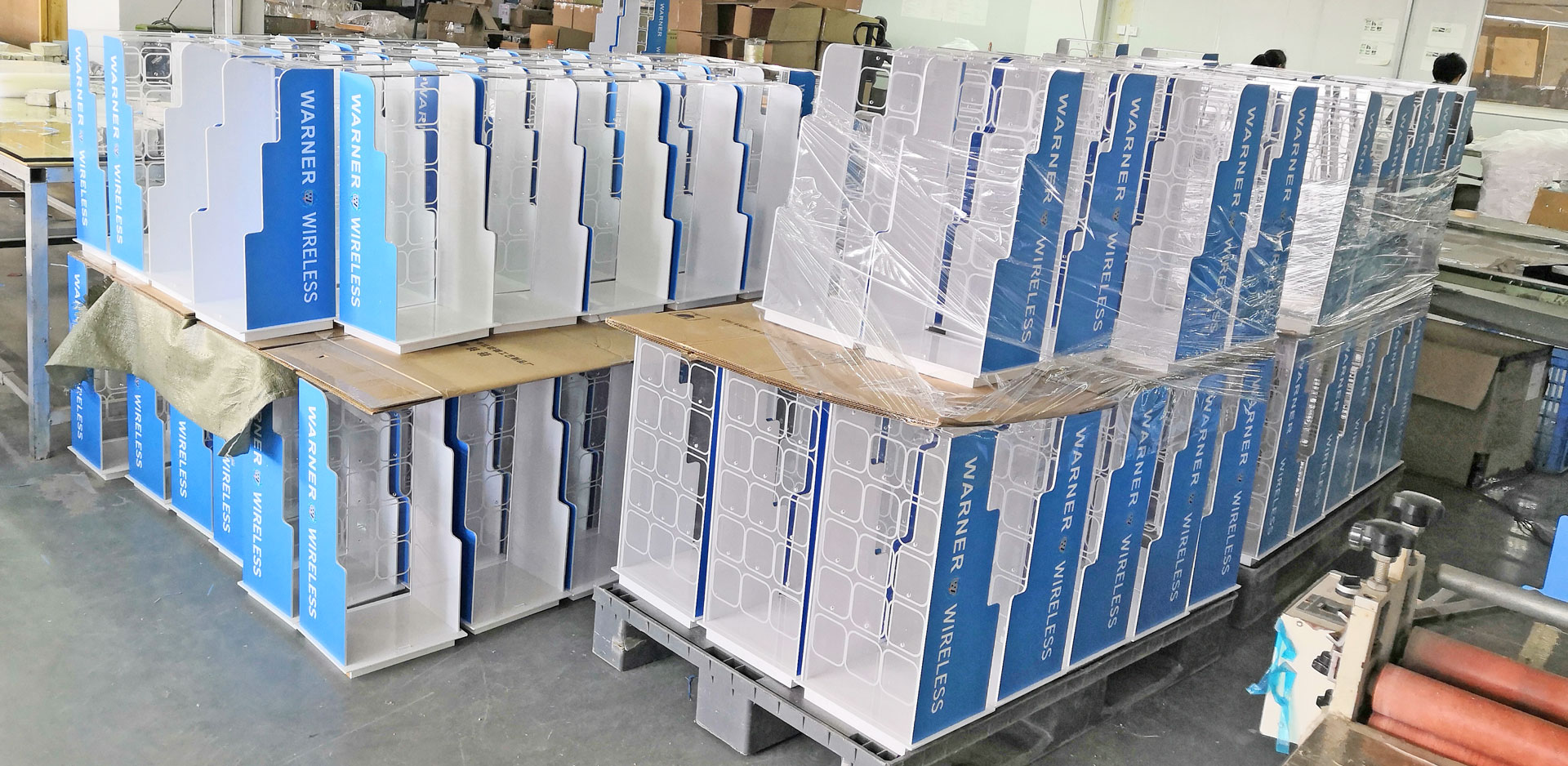
If you need professional custom scheme consultation, sampling service, or full-set acrylic display customization support, turn to JAYI Acrylic.
With over 20 years of acrylic product display manufacturing experience, our factory owns complete processing equipment for all acrylic display processing technologies, provides OEM & ODM customized services for global retail, jewelry, cosmetic, and exhibition brands, and strictly follows international export quality inspection standards to deliver stable, compliant acrylic display solutions for overseas buyers.

Cathy Qin works at Jayi Acrylic Industry Limited, focusing on custom acrylic product management and SEO-driven content marketing for B2B wholesale and retail applications. Her work includes designing display solutions, managing customization projects, and optimizing website content to promote Jayi’s high-quality acrylic products across global digital channels.
Post time: Jul-16-2026