

Custom acrylic display stands have become the mainstream display solution for global retail, beauty, jewelry, digital electronics, and exhibition industries, favored by overseas brands for their high transparency, durability, customizable performance, and lightweight features.
For overseas buyers, choosing a professional acrylic display stand customization manufacturer involves multiple core decision dimensions including product matching, material selection, processing technology, production cycle, quality inspection, and export packaging.
This complete guide systematically sorts out the whole process of acrylic display stand customization and manufacturing, helping brand purchasers quickly clarify customization needs, avoid industry pitfalls, and select high-quality customized display solutions.
This page covers the full framework of the customization business, and you can click the internal links of each section to view detailed professional content.
1. Basic Knowledge of Custom Acrylic Displays
Custom acrylic display stands are widely applicable across high-end commercial scenarios, including cosmetics retail, jewelry display, digital product exhibitions, supermarket commodity displays, and commercial exhibitions.
Before launching a customization project, overseas buyers need to clarify core demand indicators such as product size, placement environment, and display purposes to avoid customized products that do not match actual usage scenarios.
In international B2B cooperation, OEM and ODM are the two mainstream customization modes with essential differences in design independence, production standards, and service scope. Distinguishing these two cooperation models is the premise of efficient customization and cost control.
For a detailed interpretation of customized cooperation modes, please refer to Complete Differences Between OEM and ODM Custom Acrylic Displays.
2. Acrylic Displays vs Other Display Materials
Compared with traditional wooden, metal, and plastic display racks, custom acrylic display stands have irreplaceable comprehensive advantages in commercial display scenarios.
Acrylic materials have ultra-high light transmittance and premium visual texture, far exceeding traditional materials in display effect.
Meanwhile, they feature light weight, strong plasticity, good durability, and moderate cost, supporting diversified personalized customization.
This module comprehensively compares the performance, cost, and applicable scenarios of different display materials, helping overseas brands accurately judge whether acrylic display stands match their product positioning and store style.
For detailed advantage analysis, refer to Core Advantages of Acrylic Displays vs Other Materials.
3. Acrylic Raw Material Selection & Comparison
Raw material quality determines the texture, durability, and comprehensive cost of finished acrylic display racks, making material selection the core link of customized production.
Acrylic plates with different thicknesses correspond to different load-bearing and structural application scenarios, suitable for light small ornaments and heavy electronic products respectively.
In terms of appearance, transparent, frosted, colored and mirror acrylic materials present completely different display styles to meet diverse brand positioning needs.
In addition, virgin acrylic and recycled acrylic differ greatly in surface finish, aging resistance, cost, and service life.
For special scenarios such as food contact and high-fire-risk environments, special functional acrylic materials including scratch-resistant, fireproof, and food-grade plates are required.
To select materials accurately according to demands, check the Full Guide to Acrylic Display Stand Raw Material Selection.
4. Design and Sampling Process of Acrylic Display Stands
Standardized design and sampling procedures ensure that finished products fit buyers’ brand expectations and functional requirements.
We support three flexible sampling methods to adapt to different customer conditions: customized production according to customer drawings, optimized design based on hand-drawn sketches, and copying production of physical samples.
The complete process covers 3D effect drawing confirmation, mold opening, and prototype production. Buyers can confirm product details through samples and put forward modification suggestions.
Meanwhile, the sampling cycle, charging standards, and revision rules are standardized to ensure transparent and efficient cooperation.
For special-shaped and personalized acrylic display stands, targeted design skills are required to avoid structural defects.
For full operational details, view Acrylic Display Stands Complete Design and Sampling Steps.
5. Acrylic Display Stand Processing Technology Explanation
Diversified processing technologies realize the personalized and high-end customization of acrylic display stands.
The mainstream manufacturing crafts in the industry include precision cutting, fine polishing, high-temperature hot bending, seamless bonding, screen printing, and laser engraving.
Each process has unique application scenarios, presentation effects, and cost standards. Enterprises can select matching processes according to display grade and budget.
In addition, personalized processing technologies such as custom LOGO printing, embossing, and magnetic assembly can further improve the uniqueness and practicality of display stands.
Understanding the differences in process effects and costs helps buyers avoid unnecessary budget waste.
For professional process comparison and selection suggestions, please browse Comparison of Various Processing Technologies for Acrylic Displays.
6. Custom Solutions for Acrylic Displays in Various Industries
Different industries have differentiated functional and aesthetic requirements for acrylic display stands, and universal display solutions cannot meet professional commercial display needs.
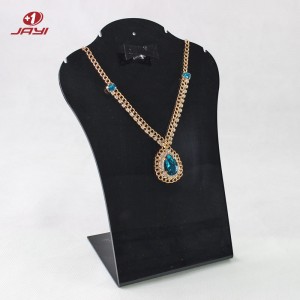
For high-end jewelry industries, display stands focus on anti-scratch, high transparency, and layered structural design to highlight product luxury.
For cosmetics retail, layered storage and fashionable appearance design are the core demands.
For digital electronic products, stable structure and anti-slip design ensure placement safety.
For temporary exhibition scenarios, detachable and portable structural design reduces transportation and installation costs.
We provide targeted customized schemes for mainstream industries, covering all scenario-based display demands.
For industry-specific professional solutions, refer to Industry-Specific Custom Acrylic Display Solutions.
7. MOQ, Lead Time and Mass Production Rules
Order quantity and delivery cycle are key factors affecting buyers’ inventory planning and market sales.
To adapt to different procurement demands, we have formulated clear MOQ standards for small-batch sampling and large-batch mass production.
Conventional standard acrylic display stands have lower customization thresholds and stable production cycles, while special-shaped customized acrylic displays with complex processes require longer production time.
In peak order seasons, we support reasonable order scheduling and urgent production schemes to meet customers’ emergency delivery demands.
Meanwhile, standardized loss control and replenishment rules for batch orders ensure the stability of long-term cooperation.
For detailed parameter standards, check the MOQ and Production Lead Time Instructions for Custom Acrylic Displays.
8. Finished Product Quality Inspection Standards
Strict quality inspection is the core guarantee for export-qualified acrylic display stands.
Before delivery, all finished products will pass comprehensive multi-dimensional quality testing.
The appearance inspection covers surface scratches, bubbles, color difference, and bonding gaps to ensure a flawless product appearance.
The structural test verifies load-bearing capacity and splicing firmness to avoid deformation and looseness during use.
In addition, the clarity and restoration degree of screen printing and laser engraving patterns will be strictly checked to ensure consistent brand display effects.
All inspection procedures comply with international export standards. For complete export inspection lists and acceptance specifications, view the Custom Acrylic Display Stand Factory Quality Inspection List.
9. Export Packaging and Logistics Solutions
Acrylic displays are prone to scratches and cracks during long-distance cross-border transportation, so professional protective packaging is essential.
We adopt standardized export packaging schemes, including shockproof pearl cotton wrapping, independent carton packaging, and wooden frame reinforcement for fragile products, which can effectively avoid product damage during sea and air transportation.
We have summarized targeted anti-scratch and anti-breakage protection techniques for different product structures. Meanwhile, we compare the cost and timeliness of different logistics methods to facilitate buyers’ reasonable selection.
We also support customized batch packaging services for overseas warehouse stocking to meet long-term cross-border operation demands. For detailed logistics and packaging solutions, refer to Customized Acrylic Display Export Packaging and Logistics Solutions.
10. Export Certification and Overseas Market Compliance
To smoothly enter European, American, and other mainstream overseas markets, custom acrylic display stands must meet local safety and environmental protection compliance standards.
Our acrylic displays have obtained FDA food-grade certification applicable to North American markets, supporting display scenarios involving food and cosmetic contact.
Meanwhile, all materials comply with EU RoHS environmental protection standards, free of harmful substances. Products used in supermarkets and international exhibitions need to meet higher material compliance requirements.
We have sorted out complete customs declaration materials and compliance preparation guidelines for different countries and regions to help buyers complete customs clearance efficiently.
For full certification details, browse the Custom Acrylic Display Stand Export Certification Complete List.
11. How to Select a Reliable Custom Acrylic Display Manufacturer
Supplier quality directly determines acrylic display quality, delivery stability, and long-term cooperation experience.
When screening customized acrylic display manufacturers, overseas buyers need to comprehensively evaluate factory production capacity, equipment configuration, and independent sampling capability.
Efficient communication response, flexible drawing modification services, and perfect after-sales guarantee are also important evaluation indicators.
In addition, it is necessary to master factory inspection and sample verification skills, and avoid common quality traps of low-cost manufacturers in the industry.
Scientific supplier selection can effectively reduce procurement risks and improve customization efficiency.
For detailed selection strategies, check How to Choose Reliable Custom Acrylic Display Manufacturers.
Conclusion
Custom acrylic display stand manufacturing is a systematic project covering material selection, design processing, production management, quality inspection, and export service.
Supported by 22 years of acrylic display products production experience, JAYI Acrylic compiles this guide to build a complete knowledge framework for customized acrylic display stands, covering all core decision links for overseas purchasers.
Each professional subdivision problem can be learned and understood through the detailed subdivision pages developed by JAYI Acrylic, helping global brand buyers complete high-quality, efficient, and compliant acrylic display stand customization cooperation.
Browse Our Custom Acrylic Display Stands Collection








Cathy Qin works at Jayi Acrylic Industry Limited, focusing on custom acrylic product management and SEO-driven content marketing for B2B wholesale and retail applications. Her work includes designing display solutions, managing customization projects, and optimizing website content to promote Jayi’s high-quality acrylic products across global digital channels.
Post time: Jun-30-2026